Istanbul: The Definitive Transcontinental Masterpiece — An Imperial, Architectural, and Cultural Codex
Quick Answer:
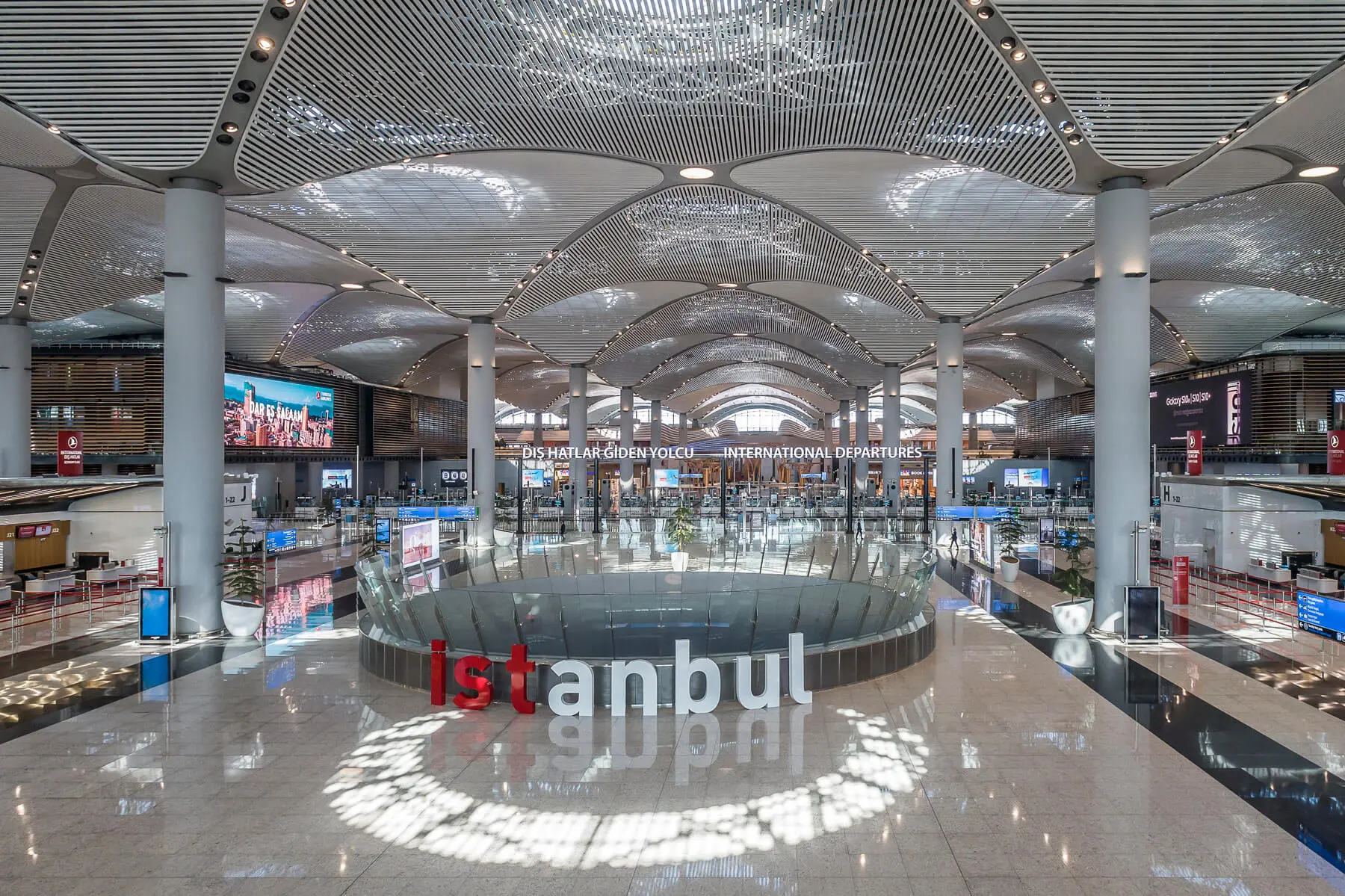
Istanbul is a sprawling transcontinental metropolis that demands precision ground logistics. Transitioning from Istanbul Airport (IST) to executive hubs like Maslak or waterfront palaces in Beşiktaş takes 45-60 minutes, highly dependent on Bosphorus bridge traffic. High-profile travelers rely on comprehensive meet and greet services for VIP terminal extraction, paired with dedicated private chauffeurs who possess an intuitive understanding of the city’s micro-routes and congestion patterns to ensure total scheduling freedom and security.
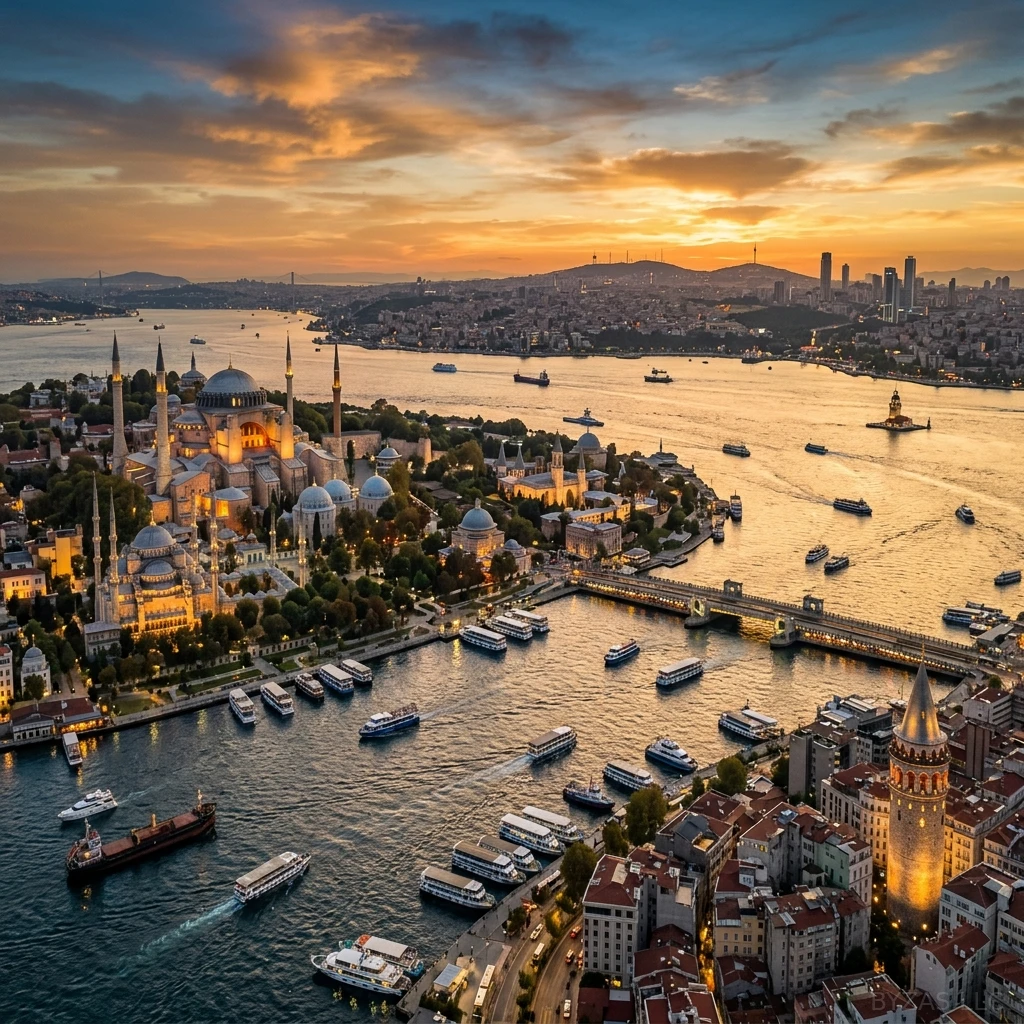
Istanbul at golden hour — the historic peninsula commanding the Bosphorus Strait.
Chapter I: The Geopolitical Singularity & The Megarian Genesis
To analyze Istanbul through the pedestrian lens of modern urbanism is an exercise in reductionism. The city is not a mere accumulation of concrete, steel, and administrative boundaries across Europe and Asia; it is a profound geopolitical singularity. It occupies the precise structural node where the tectonic plates of human civilization, global trade, and imperial ambition have collided and fused for over two and a half millennia.
The topography of Istanbul is an explicit architectural manifestation of strategic command. Positioned at the convergence of the Black Sea and the Mediterranean via the narrow, deep-water trench of the Bosphorus, and bifurcated on its European flank by the natural harbor of the Golden Horn (Haliç), the site was geographically predestined to act as both an absolute barrier and an international thoroughfare. It is the definitive maritime choke point of the Old World, controlling the pulse of transcontinental transit between the Eurasian steppes and the classical Mediterranean basin.
                  THE GEOPOLITICAL COMPRESSION OF THE GOLDEN HORN

      [THE EUROPEAN HINTERLAND]                       [THE BLACK SEA AXIS]
                 |                                             |
                 v                                             v
        +-----------------+                           +-----------------+
        |  The Seven Hills| <--- [THE GOLDEN HORN] -->|  The Bosphorus  |
        |  Historic Core  |      (Natural Harbor)     |  Deep Trench    |
        +-----------------+                           +-----------------+
                 |                                             |
                 +-----------------------+---------------------+
                                         |
                                         v
                              [THE SEA OF MARMARA]
The historical narrative initiates not with imperial decrees, but with a calculated consultation of divine prophecy. In 657 BCE, Byzas of Megara, a visionary colonial leader from the Greek mainland, sought direction from the Delphic Oracle of Apollo regarding the optimal foundation site for a new maritime trading post. The Oracle’s response was cryptically precise:
“Build your city opposite the blind.”
For years, Megarian navigators charted the complex currents of the Aegean and the Propontis (the Sea of Marmara) until they reached the southwestern mouth of the Bosphorus. Here, on the Asian shoreline, the earlier Greek colony of Chalcedon (modern Kadıköy) had already been established in 685 BCE. Byzas stood upon the opposite, European headland—a majestic, elevated promontory now known as the Seraglio Point (Sarayburnu)—and observed the immense geographic disparity.
The settlers of Chalcedon had been completely “blind” to the monumental strategic supremacy of the opposing shore. While Chalcedon possessed an open, unprotected coastline vulnerable to maritime surges and lacking natural defensive barriers, the Seraglio Point commanded a high, three-sided maritime plateau. It overlooked a deep, finger-like estuary that extended seven kilometers inland: the Golden Horn. This unique body of water was entirely sheltered from the violent autumn and winter tempests of the open seas, offering a pristine, current-free basin where entire commercial and military fleets could safely anchor.
Furthermore, the Golden Horn teemed with extraordinary marine life. The natural migration patterns of Atlantic bonito (palamut) and bluefish, squeezed through the narrow bottleneck of the Bosphorus, transformed the estuary into an effortless, hyper-productive fishing ground, providing an inexhaustible source of protein that could sustain a massive urban population during prolonged land sieges. Byzas recognized that this triangular peninsula was not merely a site for a city; it was an unassailable maritime fortress designed by nature to project absolute power across both land and sea. The Megarian colony of Byzantium was thus anchored into the limestone bedrocks of the first hill, setting in motion an unbroken lineage of urban transformation.
Chapter II: Nova Roma — Constantine’s Spatial Grid and the Theatre of Power
The transition of Byzantium from a prosperous, localized maritime trading post to the definitive capital of the civilized world occurred with violent geographical intentionality in 330 CE. Emperor Constantine the Great recognized that the traditional capital of Rome was structurally compromised—geographically detached from the highly lucrative eastern trade routes and militarily isolated from the volatile Danubian and Persian frontiers. He required a blank slate, a Nova Roma (New Rome), through which he could institutionalize Christianity and consolidate the administrative machinery of an increasingly bureaucratic empire.
                     CONSTANTINE'S TRIUMPHAL AXIS (THE MESE)

 [Milion / Augustaion] ---> [Forum of Constantine] ---> [Forum of Taurus] ---> [Land Walls]
 (The Zero-Mile Marker)       (Porphyry Column)          (Triumphal Arch)      (Defensive Shield)
Constantine did not merely occupy the existing Megarian urban footprint; he completely shattered it, projecting a new, monumental spatial grid across the peninsula’s legendary seven hills. He understood that imperial architecture was not merely aesthetic decoration, but a highly sophisticated system of non-verbal political communication—a physical theatre of power designed to awe foreign emissaries, suppress domestic rebellion, and manifest the divine authority of the Christian emperor.
To replicate the cosmic prestige of Old Rome, Constantine mandated that the new capital mirror the exact symbolic geography of its predecessor. The urban space was structured around a monumental, central triumphal avenue known as the Mese (The Middle Way). This massive, colonnaded highway, lined with white Proconnesian marble porticoes and hundreds of classical statues stripped from pagan temples across Greece and Egypt, functioned as the primary ceremonial nervous system of the empire.
The Mese initiated at the Milion, a monumental golden monument erected near the first hill that served as the absolute zero-mile marker of the civilized world. Every highway traversing the European continent was measured directly from this exact stone, positioning the city as the literal center of gravity for human transit. From the Milion, the Mese marched westward, connecting a series of colossal, circular and oval public forums that punctuated the topography of the hills.
The Forum of Constantine: Constructed on the summit of the second hill, this oval public space was paved in pure marble and centered around a magnificent, 35-meter-high column composed of circular porphyry drums imported from the deepest quarries of Upper Egypt. Atop this column stood a colossal bronze statue of Apollo, re-fashioned with the features of Constantine himself, crowned with a radiant halo of solar rays that contained fragments of the True Cross. This monument was a brilliant syncretic statement, blending solar pagan majesty with emergent Christian triumphalism.
The Hippodrome: Positioned immediately adjacent to the Great Palace complex on the first hill, the Hippodrome was engineered to hold over 100,000 spectators. It was far more than a sporting venue for chariot racing; it was the ultimate political arena where the absolute autocracy of the Emperor met the organized voice of the citizenry. The central spine (spina) of the race track was adorned with ancient monuments of immense historical gravity, including the Serpent Column brought from the Temple of Apollo at Delphi, signaling that New Rome was the direct heir and guardian of classical antiquity.
The Great Palace (Palatium): Sprawling down the terraced slopes of the first hill toward the Sea of Marmara, this was a highly secure, modular campus of reception halls, private chapels, hidden courtyards, and barracks. The architecture was designed to enforce a rigid, semi-divine court ritual. Foreign ambassadors describing their audience with the Emperor noted that they were forced to prostrate themselves before a mechanical throne (Thronos Solomonis) that physically ascended into the ceiling, accompanied by gilded mechanical lions that roared audibly, utilizing compressed air mechanics to manifest the technological superiority of the Roman state.
Chapter III: The Justinian Laboratory — The Pendentive Revolution and Sacred Geometry
The definitive structural and architectural climax of the city occurred in the 6th century under the radical, iron-willed administration of Emperor Justinian I. Following the catastrophic Nika Riots of 532 CE, which incinerated over half of the imperial core—including the original Constantinian basilicas—Justinian did not merely seek to rebuild; he chose to execute an architectural revolution that would permanently decouple Western architecture from its classical Greco-Roman limitations.
To design the new patriarchal cathedral of Hagia Sophia (Ayasofya), Justinian bypassed traditional master builders and stone masons. Instead, he appointed two visionary theoreticians: Anthemius of Tralles, a brilliant mathematician and expert in projective geometry, and Isidore of Miletus, a renowned physicist who specialized in structural mechanics. They approached the commission not as a standard construction project, but as an advanced mathematical and physical experiment in sacred geometry.
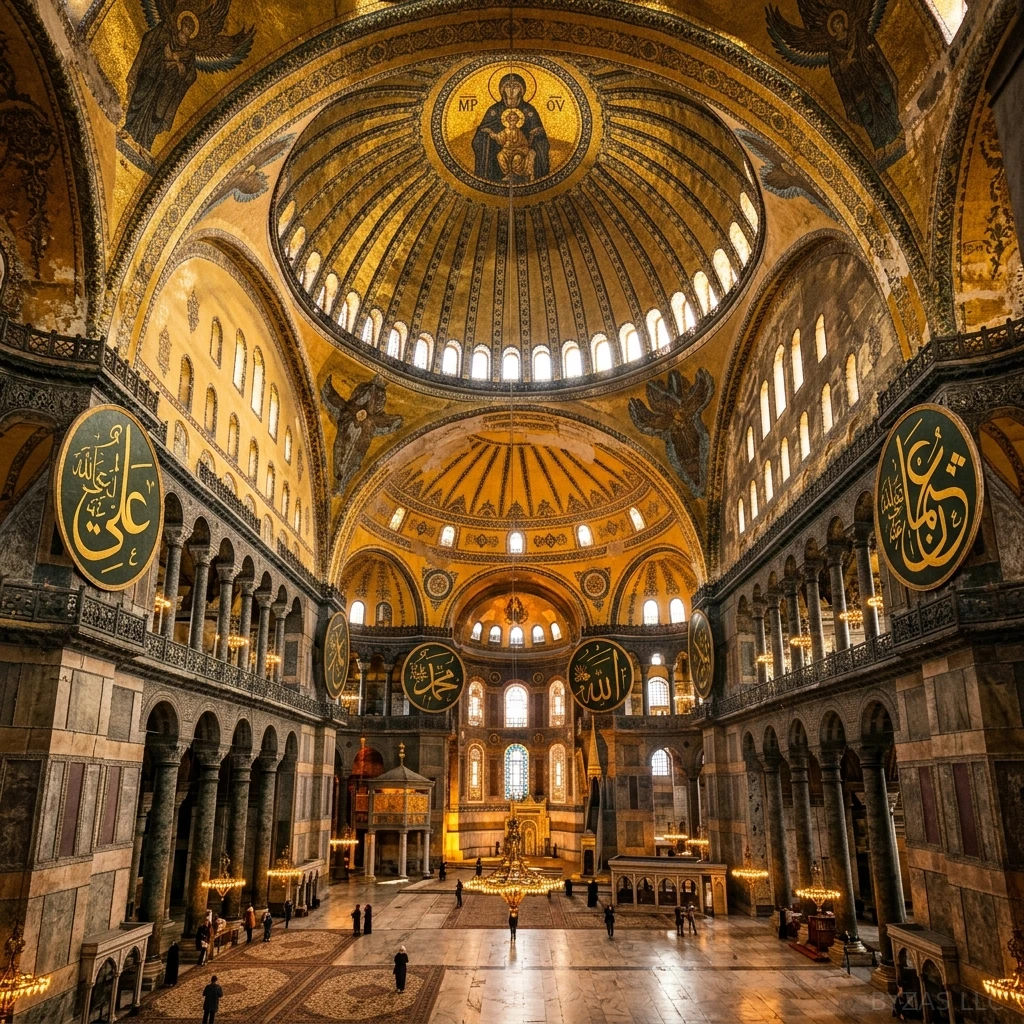
The interior of Hagia Sophia illuminated at prayer hour. The pendentive structural system supports the monumental dome.
                      THE PENDENTIVE STRUCTURAL LOGIC

                                .--''''--.
                             .'            '.  <--- The Monumental Floating Dome
                            /                \
                           |                  |
                       +---|------------------|---+
                       |   |  [PENDENTIVE]    |   | <--- The Spherical Triangles
                       |   '.                .'   |      (Translates weight to piers)
                       |     '..          ..'     |
                       +--------\--------/--------+
                                 |      |
                                 v      v
                           [MONUMENTAL PIERS]
The fundamental architectural challenge of antiquity was the placement of a massive, heavy circular dome over a square, rectangular floor plan. Traditional Roman architecture, as demonstrated in the Pantheon, achieved large domes by resting them directly on top of thick, circular cylindrical walls, which completely eliminated the possibility of creating open, lateral interior spaces or incorporating large window openings. Anthemius and Isidore solved this ancient limitation by pioneering the structural application of the pendentive.
The pendentive is a triangular segment of a sphere that tapers as it descends, effectively translating the immense downward and outward lateral thrust of a circular dome onto four monumental stone piers positioned at the corners of a square base. This engineering breakthrough achieved several profound spatial results:
Absolute Interior Openness: By concentrating the structural weight onto four isolated corner piers rather than continuous solid walls, the architects eliminated the need for interior load-bearing partitions, creating a colossal, uninterrupted interior space spanning over 70 meters in length.
The Illusion of Weightlessness: At the base of the 31-meter-wide central dome, Anthemius pierced the structural shell with forty closely spaced arched windows. When the fierce maritime sun of Istanbul strikes the building, the intense light floods through these openings, effectively illuminating the masonry ring and obscuring the structural connections. To the historical observer, it appeared as though the dome was not resting on solid stone at all, but was hung by a golden chain from the heavens.
The Material Symphony: Justinian spared no economic expense in sourcing the material lining for this sacred geometry. The interior walls were clad in book-matched marble slabs selected from the finest provincial quarries: green marble from Carystus, white-and-black stone from Proconnesus, pink-veined marble from Phrygia, and deep red porphyry from Egypt. These slabs were split open down the middle and mounted side-by-side to reveal mirrored, kaleidoscopic patterns that resembled flowing water or ancient landscapes. Above the marble line, the vaulted ceilings were covered in over four acres of pure gold-leaf mosaics, which caught the flickering light of thousands of polycandelon oil lamps, transforming the interior into an shifting, luminous universe completely detached from the material realities of the earth outside.
Chapter IV: The Palatial Campus — The Shift from Monumentalism to the Ottoman Pavilion Layout
With the fall of Constantinople in 1453, the urban and philosophical orientation of the city’s ruling core underwent a profound structural transformation. Sultan Mehmed II (the Conqueror) inherited a classical European capital defined by axiality and monumentalism. The Roman and Byzantine states had prioritized single-block, multi-story masonry fortresses designed to dominate the skyline and project an intimidating, monolithic authority over the public space. The Ottomans, drawing from a synthesis of Central Asian nomadic spatial memory, Persian courtly refinement, and Islamic privacy codes, introduced a radically counter-monumental architectural philosophy: the pavilion-campus layout.
                      TOPKAPI PALACE SECURE PERIMETER

   [BAB-I HÜMAYUN]        --->    [BABÜSSELAM]        --->    [BABÜSSAADE]
 (Imperial Outer Gate)          (Middle Gate)               (Gate of Felicity)
          |                            |                            |
          v                            v                            v
   FIRST COURTYARD             SECOND COURTYARD             THIRD COURTYARD
 (Public Administrative)     (State Council / Divan)       (The Private Harem)
In 1459, Mehmed II selected the ancient Megarian acropolis on the Seraglio Point (Sarayburnu)—the first hill—to construct Topkapı Palace (Saray-ı Cedid-i Amire). Instead of creating a singular, towering stone edifice, Ottoman architects engineered a sprawling, low-slung administrative and domestic campus structured around four highly secure, sequential open-air courtyards, each guarded by monumental gates that regulated access based on a strict hierarchy of state proximity.
The First Courtyard (Alay Meydanı) Accessed via the monumental Bab-ı Hümayun (Imperial Gate) directly behind Hagia Sophia, this was the only precinct open to the general public. It functioned as a vast transition zone between the chaotic outer city and the ordered peace of the palace. Here, surrounded by manicured parklands, wood-storage yards, the imperial mint (Darphane-i Amire), and the ancient 4th-century Byzantine basilica of Hagia Irene, foreign dignitaries and state officials dismounted their horses. From this point forward, absolute silence was mandated across the entire palace infrastructure.
The Second Courtyard (Divan Meydanı) Entry to this precinct required passage through the heavily fortified Babüsselam (Gate of Salutation), flanked by twin conical towers. This courtyard was the administrative engine of the Ottoman Empire. On its western flank sat the Kubbealtı (Imperial Council Chamber), where the Grand Vizier and his ministers debated global geopolitics and legal decrees. The architecture here was deliberately kept low and linear, shaded by wide, overhanging eaves that prioritized horizontal integration with the natural landscape rather than vertical domination. Strikingly, the Sultan did not sit openly in these council meetings. Instead, he observed the deliberations from a small, barred window hidden high up in the wall behind a curtain, connected directly to his private quarters. This architectural device ensured that the ministers always acted under the psychological weight of the Sultan’s invisible, omnipresent gaze.
The Third Courtyard (Enderun Avlusu) Passing through the Babüssaade (Gate of Felicity) brought the observer into the absolute sovereign core of the empire. This was the Enderun, the private university and palace school where elite youths were trained to become governors, diplomats, and military commanders. The architecture transitioned into a series of highly refined, tile-clad pavilions arranged around a central lawn, including the Audience Chamber (Arz Odası), the Imperial Treasury, and the Chamber of Holy Relics.
The Imperial Harem and the Iznik Kinetic Art Tucked into the northwestern corner of this campus was the Harem—a highly secure, multi-layered labyrinth of over three hundred rooms, private baths, and courtyards designed by the chief imperial architect Mimar Sinan in the late 16th century. The Harem rejected European symmetry entirely; it evolved organically over centuries as a sequence of domestic pavilions matching the changing needs of the Sultan’s family. The true architectural luxury of the Harem was not found in structural mass, but in its surface ornamentation. The walls were lined with thousands of hand-painted ceramic tiles produced in the royal kilns of Iznik. These tiles utilized a sophisticated underglaze technique that combined deep cobalt blues, rich turquoise, vibrant emerald greens, and a brilliant, raised tomato-red (mercan kırmızısı) that remains impossible to replicate with modern chemical firing methods. The motifs were highly symbolic—complex patterns of twisting tulips, blooming carnations, weeping willows, and cypress trees that transformed the enclosed, stone-walled rooms into an eternal, metaphorical paradise garden. When illuminated by candle fire and the natural light streaming through upper stained-glass windows, the glossy glaze of the tiles created a kinetic shifting reflection that made the solid stone walls appear fluid and weightless, a subtle continuation of the Byzantine spatial illusions executed a thousand years prior.
Chapter V: The Fluid Topography — The Bosphorus Expansion, Hydraulic Engineering, and the Yalı Phenomenon
As the Ottoman Empire matured into the 18th and 19th centuries, the seat of political power and elite social life executed a dramatic geographic migration away from the historical peninsula of the first hill. The dense, enclosed urban fabric of old Istanbul surrendered to a new, sprawling, and intensely fluid lifestyle mapped directly onto the steep, forested shorelines of the Bosphorus Strait.
                  THE WATERFRONT EMBANKMENT TRANSITION

   [THE SHORELINE ROAD] ---> [THE TIMBER STILTS] ---> [THE STONE QUAY]
   (Public Access Edge)      (Subterranean Void)       (Direct Sea Contact)
            |                        |                         |
            v                        v                         v
     Modern Era Era           Pre-19th Century            Classical Yalı
The Bosphorus is not a standard river or a calm marine bay; it is a highly volatile, deep-water strait carved out by ancient post-glacial floods that connected the Black Sea to the Mediterranean via the Sea of Marmara. It features a complex, bi-directional hydraulic current system that requires immense maritime mastery to navigate.
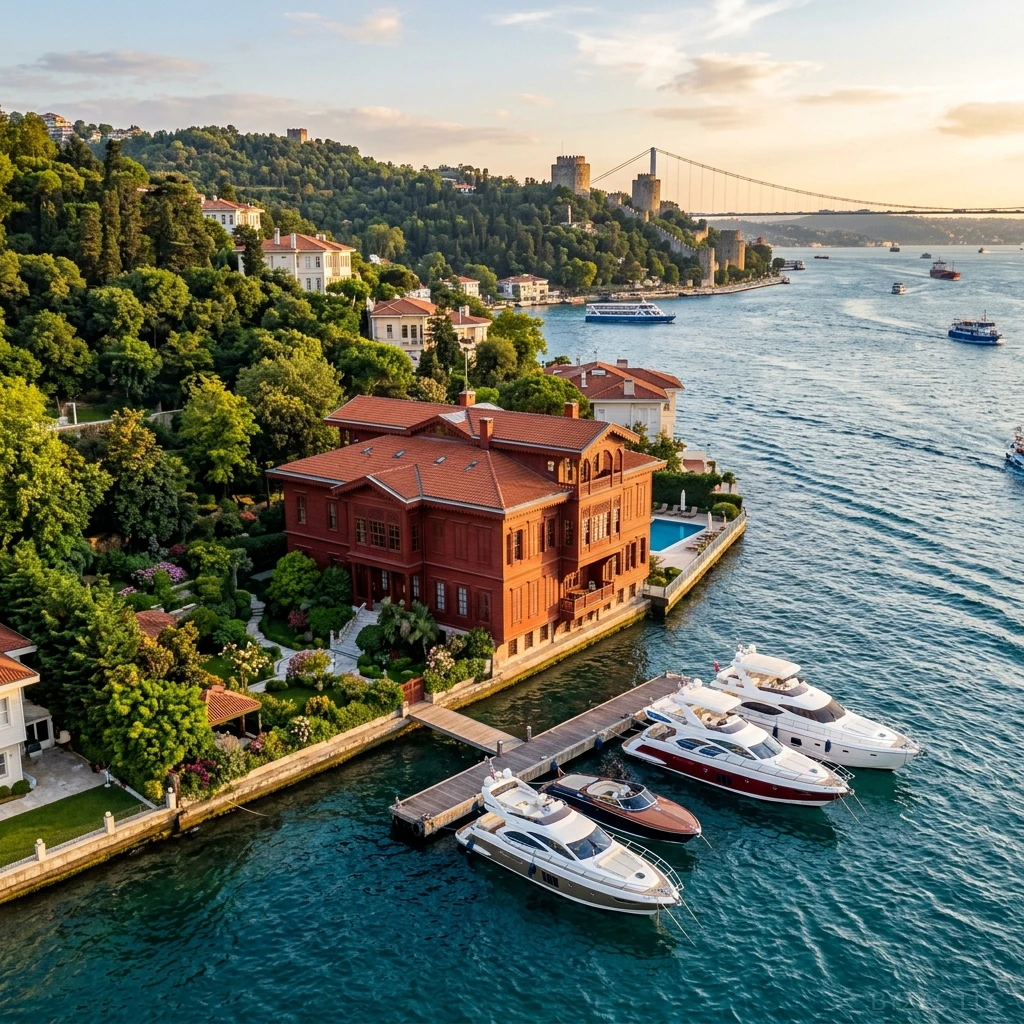
A preserved Yalı mansion near Rumelihisarı on the European Bosphorus shoreline.
The upper surface current flows rapidly from north to south, carrying cold, brackish water from the Black Sea down toward the Marmara at speeds exceeding five knots at narrow bottlenecks like Rumelihisarı. Simultaneously, a deep, highly saline counter-current flows silently hundreds of feet below the surface from south to north, carrying warm Mediterranean waters back toward the Black Sea.
The Engineering of the Yalı Architecture This volatile maritime environment became the definitive setting for the Yalı—monumental timber mansions constructed directly at the water’s edge. To live in a Yalı was to participate in a sophisticated bioclimatic and structural experiment. Because the steep volcanic hills of the Bosphorus left very little flat, buildable land along the shoreline, Ottoman master builders developed an innovative marine foundation system. They drove thousands of heavy pine and oak piles deep into the underwater silt and bedrock along the shoreline. Atop these submerged timber stilts, they constructed a heavy, interlocking sub-floor grid of resin-treated timber beams. This created an elevated stone and wood platform that floated directly over the changing sea level, absorbing the continuous, repetitive kinetic energy of the Bosphorus waves without fracturing the upper residential masonry.
The superstructure of the Yalı was built entirely of wood, utilizing a lightweight, highly flexible timber frame system known as bağdadi. This material choice was a deliberate engineering defense against two of Istanbul’s greatest structural threats: catastrophic earthquakes and heavy thermal expansion. While a rigid stone mansion would crack and collapse under seismic shear waves, the flexible timber joints of a Yalı could sway and flex, distributing the energy safely across the entire structural network.
The Bioclimatic Spatial Layout The interior layout of a Yalı was strictly dictated by the micro-climates of the strait. The heart of the mansion was the Sofa—a colossal, double-height central reception hall that traversed the entire width of the building, connecting the street entrance directly to the waterfront windows. The Sofa functioned as a natural, passive cooling mechanism. By opening the massive sash windows on the sea-facing side and the smaller windows on the shaded garden side, the architects utilized the Venturi effect. The crisp, cool maritime air current generated by the Poyraz wind over the water was pulled effortlessly through the interior rooms, lowering the ambient temperature by several degrees without the need for artificial ventilation.
                           THE PASSED VENTURI COOLING EFFECT

       [SHADED REAR GARDEN]                               [THE BOSPHORUS STRAIT]
         High-Pressure Air                                   Low-Pressure Air
                 |                                                  ^
                 v                                                  |
        +--------------------------------------------------------------------+
        | Small Windows ---> [ CENTRAL RECEPTION SALON / SOFA ] ---> Large   |
        |                      (Passive Thermal Exchange)            Windows |
        +--------------------------------------------------------------------+
The rooms flanking the Sofa were highly specialized. They were divided strictly into the Selamlık (the public, male-dominated wing where business, diplomatic negotiations, and intellectual gatherings occurred) and the Harem (the private, highly insulated family quarters). The waterfront edge of the Yalı was marked by an overhanging upper floor that projected out over the water, supported by elegant wooden brackets (eliböğründe). This architectural projection allowed residents to look directly down into the crystalline marine depths while preventing passengers on passing boats from seeing into the private upper rooms, achieving an ideal balance of visual command and total domestic discretion.
Chapter VI: The Transcontinental Urban Fabric — Neighborhood Biographies & Socioeconomic Micro-Cultures
To move through Istanbul with genuine intelligence requires an understanding that the contemporary metropolis is a complex federation of distinct urban enclaves. Each neighborhood possesses its own distinct historical trajectory, architectural vernacular, and socioeconomic profile.
Bebek: The Aristocratic Crescent Nestled into one of the most deep and protected crescent bays of the European shoreline, Bebek has transitioned from a quiet Ottoman fishing village into the absolute capital of established multi-generational wealth. Its modern evolution began in the early 18th century when Grand Vizier Nevşehirli Damat İbrahim Pasha constructed a grand imperial summer kiosk here, triggering an immediate migration of court officials and wealthy Levantine merchant families. The geography of Bebek provides a unique micro-climatic shelter; the high ridges behind the bay block the harsh, biting northern winter winds while capturing the gentle, refreshing summer airflows. Today, the district operates with an exclusive, highly polished energy. Its waterfront is lined with elegant Art Nouveau apartment blocks and historic piers that serve as private yacht moorings. The social fabric here is intensely loyal to its local institutions; generations of the same families utilize the seaside boardwalks as an extended outdoor living room, completely insulated from the high-volume tourism of the old city.
Nişantaşı: The Cosmopolitan Ridge Unlike the maritime-centric Bosphorus neighborhoods, Nişantaşı is an elevated, land-locked urban sanctuary built along the mountain ridges above Beşiktaş. Developed explicitly in the mid-19th century under Sultan Abdülmecid I, who erected target stones (nişan taşı) here to mark his imperial archery achievements, the district was planned as a modern, Westernized urban showcase for the Ottoman elite who worked in the nearby Dolmabahçe Palace. The architecture of Nişantaşı is an exceptional display of late 19th and early 20th-century European historicism. Walking along Abdi İpekçi Street reveals majestic Neo-Classical, Neo-Baroque, and Art Nouveau apartment buildings featuring grand wrought-iron entrance gates, high ceilings, and intricate plaster moldings. The neighborhood historically welcomed the city’s intellectual, artistic, and affluent non-Muslim communities—Greeks, Armenians, and Levantines—who infused the area with a sophisticated Parisian café culture. Today, it stands as the undisputed center for haute couture, private contemporary art institutions, and high-end residential living. It maintains a refined, elegant atmosphere where the city’s creative directors and corporate elite gather in secluded courtyard bistros.
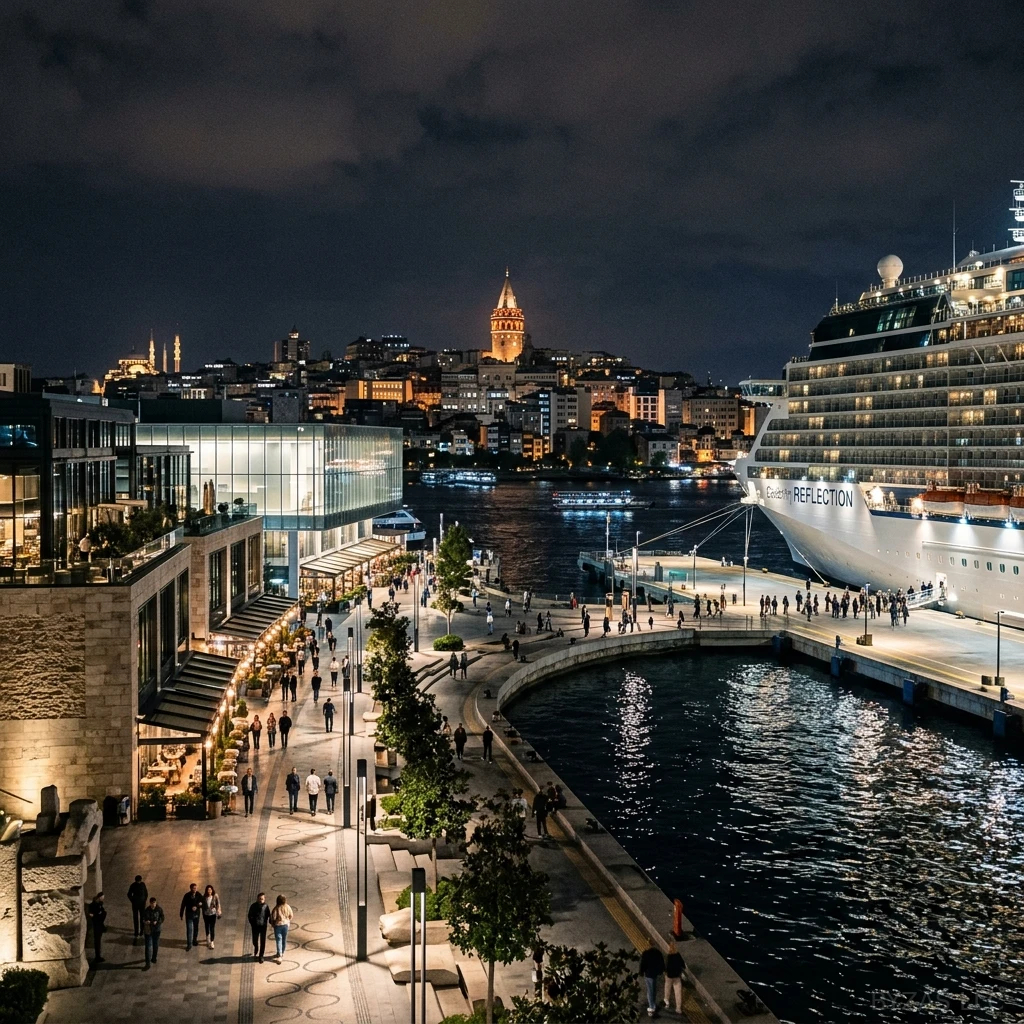
Galataport and Karaköy: The Historical Port Reinvented Karaköy occupies the strategic flats at the northern mouth of the Golden Horn, immediately below the medieval Galata Tower. During the Byzantine and Ottoman eras, this district—then known as Galata or Pera—was a walled, semi-autonomous commercial colony governed by Genoese and Venetian merchants. It was the absolute financial heart of the Levant, home to the Ottoman Bank, foreign shipping consulates, and the global merchant exchanges that dictated transcontinental trade lines. The architecture here is distinctly industrial and monumental, dominated by heavy, stone-faced late 19th-century banking houses designed by European architects like Alexander Vallaury. In the contemporary era, this heavy commercial legacy has been completely reimagined through the introduction of Galataport. This multi-billion dollar master project has successfully opened up a long-inaccessible industrial waterfront promenade. The engineering marvel of Galataport is its underground cruise passenger terminal, which utilizes a revolutionary vertical wall hatch system. When a luxury liner docks, the massive mechanical glass-and-steel barriers rise from beneath the concrete to seal off the secure customs zone. The moment the ship departs, the hatches sink back into the promenade floor, keeping the waterfront open and accessible. This development has transformed Karaköy into a vibrant cultural crossroads where the historic, raw stone lanes of the old port meet cutting-edge art museums like the Istanbul Modern and ultra-premium hospitality enclaves.
                      GALATAPORT VERTICAL HATCH MECHANICS

     [CRUISE BERTHED STATE]                        [NO CRUISE PRESENT STATE]

     +-----------------------+                    +-----------------------+
     |   Luxury Vessel Hull  |                    |    Open Maritime Sky  |
     +-----------------------+                    +-----------------------+
     =========================                    =========================
     | | [MECHANICAL HATCH]  |                    |                       |
     | | (Risen Security Edge|                    |  [RECESSED PATHWAY]   | <--- Free Public
     | |  Locks Customs Zone)|                    |  (Hatches lowered     |      Promenade
     +-----------------------+                    |   into stone floor)   |
     |  Underground Terminal |                    +-----------------------+
     +-----------------------+                    |  Underground Terminal |
                                                  +-----------------------+
Kandilli and Kanlıca: The Serene Asian Sanctuaries Crossing the Bosphorus to the Asian shoreline brings the traveler into a completely different temporal and architectural rhythm. Kandilli and Kanlıca sit precisely where the strait grows narrowest and the hills rise steepest. Historically favored by the Ottoman royal family and religious elite for their absolute seclusion, these neighborhoods have fiercely resisted high-density modern commercialization. The architecture here is deeply rooted in the preservation of the historic Yalı lifestyle and grand, hillside timber estates (köşk). The narrow, winding lanes are shaded by monumental, century-old plane trees and ancient stone walls enclosing lush private gardens. The micro-culture here is defined by an understated, generational old-money identity that values privacy over public visibility. The daily life centers around simple, elegant rituals—such as gathering at the historic waterfront squares to watch the maritime traffic navigate the treacherous Bosphorus currents or visiting independent local workshops that have crafted traditional goods for over a century.
Chapter VII: The Culinary Chronology — From Palace Kitchen Formularies to Neo-Anatolian Gastronomy
The gastronomic identity of Istanbul is not a modern creation, but a monumental, centuries-old accumulation of culinary knowledge. As the absolute terminus of the Silk Road and the primary administrative hub of an empire that stretched from the gates of Vienna to the sands of Yemen, the city functioned as a massive culinary filter. It absorbed the preservation techniques of the Central Asian steppes, the spice knowledge of the Levant, the seafood mastery of the Aegean Greeks, and the refined dairy traditions of the Balkans, distilling them into a highly formalized imperial culinary science.
The Imperial Kitchen Laboratory (Saray Mutfakları) The architectural home of this science was the massive, ten-domed kitchen complex designed by Mimar Sinan at Topkapı Palace. Operating with a staff of over one thousand specialized chefs, the imperial kitchens were structured like an elite research laboratory, divided into highly specific departments: the Helvahane (confectionery and pharmacy), the Has Mutfak (the kitchen executing dishes exclusively for the Sultan), and departments dedicated solely to bread baking, dairy preservation, or meat curing. The core philosophy of Ottoman palace gastronomy was an obsession with balance, contrasting flavors, and the medicinal properties of food based on classical Galenic humorism. Chefs achieved complex flavor profiles by combining savory proteins with sweet, dried fruits and complex aromatics: The Royal Stews: Lamb and beef cuts were slow-cooked for hours in heavy copper vessels alongside dried Persian apricots, Iznik plums, Damascus figs, and local honey, balanced by the sharp acidity of unripe grapes (koruk suyu) or wild sumac infusions. The Rice Masters (Pilavcılar): Rice was treated as a supreme culinary status symbol. A master palace chef was judged entirely by his ability to cook long-grain Persian rice so that every single grain remained completely independent, translucent, and deeply infused with clarified butter, saffron, pine nuts, and shredded aromatic lamb neck. The Sherbet Infusions: Beverages were sophisticated, non-alcoholic extractions of rare botanicals. Fresh rose petals, crushed hibiscus flowers, wild tamarind, and sandalwood bark were steeped in copper vats to create Şerbet infusions designed to cleanse the palate and aid digestion between heavy courses.
The Neo-Anatolian Revolution In the contemporary era, this vast imperial archive has been systematically unlocked by a new generation of research-driven chefs who have ignited the Neo-Anatolian Gastronomy movement. Rejecting the jenerik international luxury templates that dominated the city’s restaurants for decades, these modern culinary directors treat the entire Anatolian landmass as a living museum. Operating out of hyper-modern open-kitchen theaters, they map out the agricultural origins of every single ingredient. They work directly with independent micro-producers, local foragers, and maritime captains to resurrect forgotten heritage crops: The Ancestral Wheat Programs: Chefs have rejected industrialized, high-yield grains in favor of ancient, un-hybridized wild wheats like Karakılçık and Siyez, which have been grown in the volcanic soils of Central Anatolia for over ten thousand years. These grains are milled on stone wheels and fermented with multi-decade-old sourdough cultures to create a bread program that possesses an intense, earthy minerality. Advanced Fermentation and Curing: The modern Istanbul kitchen utilizes old preservation techniques—such as clay-pot lactic fermentation, precision sun-drying, and oak-charcoal wood smoking—to intensify the natural flavors of regional ingredients. A simple wild mushroom dish is elevated by being slow-roasted over specific woods like wild cherry or olive timber, then glazed with a fermented garum reduction made from Bosphorus anchovies, beautifully bridging the city’s deep imperial past with cutting-edge technical precision.
Chapter VIII: The Underground and the Elevated — Hidden Cisterns, Fortresses, and Forgotten Vaults
The architectural narrative of Istanbul is uniquely three-dimensional. While the city’s hills are crowned with monumental mosques and palaces that dominate the visual horizon, an equally vast, silent, and highly sophisticated shadow architecture exists immediately beneath the concrete and limestone foundation layers of the streets.
                      THE THREE-DIMENSIONAL URBAN STRATA

   +-----------------------------------------------------------------------+
   |  THE ELEVATED STRATUM: Minarets, Domes, Monolithic Palace Pavilions   |
   +-----------------------------------------------------------------------+
   ======================= [ THE STREET LEVEL ] ===========================
   +-----------------------------------------------------------------------+
   |  THE UNDERGROUND STRATUM: Vaulted Byzantine Cisterns, Crypts, Passages|
   +-----------------------------------------------------------------------+
The Subterranean Hydrology: The Basilica Cistern (Yerebatan Sarnıcı) Because the historical peninsula of Istanbul lacked natural freshwater springs and was highly vulnerable to prolonged land sieges by Roman, Avar, and Ottoman forces, Byzantine emperors engineered a monumental underground water storage infrastructure. The absolute pinnacle of this engineering is the 6th-century Basilica Cistern. Constructed under Justinian I beneath the grand public square of the Augustaion, this subterranean stone palace spans nearly 10,000 square meters and was capable of holding 80,000 cubic meters of water. The engineering logic of the cistern is a profound study in structural recycling and architectural pragmatism. Rather than spending decades carving new stone blocks, the Byzantine engineers extracted 336 monumental marble and granite columns from ruined pagan temples across the expanding empire. Consequently, the cistern functions as an unintentional outdoor museum of classical architectural orders, featuring an eclectic mix of ornate Corinthian, heavy Ionic, and rustic Doric capitals. The structural weight of the streets above is distributed across these columns via an interlocking grid of brick-built cross vaults. To make the cavernous space absolutely waterproof, the interior masonry was lined with a thick, specialized hydraulic mortar composed of crushed brick, lime, and volcanic ash—a material that grew harder and denser when permanently submerged in water. In the contemporary era, this ancient subterranean hydrologic space has been enhanced by an award-winning, minimalist structural lighting design. The illumination moves through slow, gentle shifts in the color spectrum, highlighting the ripples of the water floor and throwing the colossal stone shadows into sharp relief, completely transforming the space into a deep, meditative architectural experience.
The Elevated Shield: Rumelihisarı (The Throat-Cutter) To observe the ultimate expression of elevated defensive architecture, one must travel north along the Bosphorus to its narrowest point, where the European and Asian shorelines sit just 700 meters apart. Here, in 1452, Sultan Mehmed II constructed the colossal fortress of Rumelihisarı (historically known as Boğazkesen, meaning “The Throat-Cutter”).
                     THE BOSPHORUS MARITIME CHOKE POINT

   [EUROPEAN SHORELINE]                                  [ASIAN SHORELINE]
     Rumelihisarı Fort                                   Anadoluhisarı Fort
     Elevated Cannons   <--- THE 700-METER BOTTLENECK ---> Elevated Cannons
            |              (Total Fire Control Grid)             |
            +---------------------------><-----------------------+
Built in an astonishingly brief ninety days through the coordinated labor of thousands of stone masons, the fortress was engineered to establish absolute maritime control over the strait, effectively cutting off Constantinople from receiving military reinforcements or grain supplies from the Black Sea ports. The layout utilizes three monumental towers connected by massive curtain walls that adapt seamlessly to the jagged, vertical topography of the hillside. The towers were positioned at strategic heights to support advanced gunpowder artillery, holding heavy bronze cannons that could fire massive stone balls directly at the water line of any vessel attempting to run the blockade, effectively sealing the transcontinental gateway.
Chapter IX: The Maritime Axis — Currents, Winds, and the Marine Ecosystem of the Strait
The defining character of Istanbul is its permanent, deeply systemic connection to the water. The Bosphorus Strait is not a static decorative border; it is a powerful, living marine highway that shapes the daily life, climate, and psychology of the metropolis.
The Dynamics of the Wind Systems The weather patterns and atmospheric visibility of the city are dictated by a perpetual struggle between two dominant seasonal wind systems: The Poyraz (Northeast Wind): Blowing consistently from the Black Sea, the Poyraz is a cool, crisp, and refreshing wind system that dominates the summer months. It acts as Istanbul’s natural air conditioning system, driving down humidity levels and clearing the city’s skies of urban haze. When the Poyraz blows with high velocity, it creates clear horizontal visibility across the Bosphorus, sharpening the silhouette of the historic minarets against the deep blue horizon. The Lodos (Southwest Wind): The absolute antithesis of the Poyraz, the Lodos originates in the warm expanses of the Aegean and the Mediterranean. Dominating the late autumn and winter transitions, it carries a heavy, humid warmth that causes sudden, dramatic temperature spikes. The Lodos is a chaotic, turbulent wind that creates violent, crashing swells inside the Sea of Marmara, frequently forcing the cancellation of transcontinental ferry lines and creating a heavy, atmospheric fog that wraps the city in a dense, nostalgic shroud.
                    THE PERPETUAL METEOROLOGICAL TUG-OF-WAR

  [THE BLACK SEA] ------------------ [THE POYRAZ] -----------------> [ISTANBUL]
  (Cold, Brackish Basin)          (Crisp, Cooling Breeze)          (Atmospheric Sharpness)
                                                                            ^
                                                                            |
  [THE MARMARA / AEGEAN] ------------ [THE LODOS] --------------------------+
  (Warm, High-Salinity Basin)     (Turbulent, Humid Warmth)
The Transcontinental Marine Migration The unique confluence of the brackish, nutrient-rich waters of the Black Sea with the warm, high-salinity currents of the Mediterranean transforms the Bosphorus into an exceptional marine biological corridor. Twice a year, a massive, highly synchronized transcontinental fish migration occurs through this narrow channel. In the autumn, millions of schools of wild Atlantic bonito (palamut), bluefish (lüfer), and anchovies (hamsi) migrate southward from their summer breeding grounds in the Black Sea down to the warmer waters of the Marmara and the Aegean to over-winter. In the spring, this migration pattern reverses as the fish return northward to breed. For generations, this predictable biological phenomenon has shaped the culinary calendar, literary traditions, and daily life of the city. Traditional Bosphorus fish captains have developed a complex vocabulary of maritime terms to describe the subtle changes in water texture, color, and temperature that signal the arrival of the migrating schools, preserving a deep, ancestral connection to the natural rhythms of the sea.
Chapter X: The Intellectual Landscape — Orientalism, Levantine Heritage, and Contemporary Art Manifestos
Istanbul’s intellectual and creative identity is fundamentally hybrid—a permanent dialogue between indigenous traditions and global creative movements.
The Levantine Footprint and the Pera Era During the 19th century, the district of Pera (modern Beyoğlu) became the definitive center for the city’s international intellectual life. This development was spearheaded by the Levantines—families of European origin (primarily Italian, French, and British) who had settled permanently in Istanbul during the Ottoman era, working as international bankers, diplomats, and merchant kings. The Levantines constructed magnificent, multi-story stone residences, private grand opera houses, and sophisticated literary salons along the Grand Rue de Pera. They introduced the latest European architectural trends, philosophy, and printing technologies to the city, creating a vibrant, multilingual cultural melting pot where Ottoman intellectuals and Western artists engaged in deep creative exchanges. This unique heritage is still palpably alive in the grand diplomatic embassies and historic passages that define the character of Beyoğlu today.
The Contemporary Art Manifesto: Tersane Istanbul In the contemporary era, this intellectual dialogue has found a monumental new canvas at Tersane Istanbul, located on the historic waterfront of the Golden Horn. Originally founded by Sultan Mehmed II in 1455 as the Imperial Shipyard (Tersane-i Amire), this massive industrial complex was for centuries the absolute heart of Ottoman naval construction, building colossal wooden warships inside monumental stone-vaulted dry docks.
                      TERSANE ISTANBUL METAMORPHOSIS

  1455 CE                                             2026
  [IMPERIAL NAVAL SHIPYARD] ------------------------> [CONTEMPORARY ART SANCTUARY]
  Industrial Timber Framing                           Minimalist Glass Gallerias
  Heavy Masonry Dry Docks                             Avant-Garde Sculpture Lawns
  Colossal Iron Foundry Shuts                         Global Creative Dialogues
Today, this heavy, stone-faced industrial heritage has been masterfully preserved and adapted into a premier global cultural and contemporary art sanctuary. The historic masonry dry docks and iron foundries have been transformed into minimalist, glass-fronted exhibition spaces and private galleries that host major international art exhibitions, such as Contemporary Istanbul. The open-air lawns along the edge of the Golden Horn serve as an expansive stage for monumental contemporary sculptures, allowing visitors to view avant-garde artistic expressions against the backdrop of ancient shipways and the shifting waters of the estuary. Tersane Istanbul represents the perfect contemporary maturity of the city—a place where the raw, industrial memory of an empire is effortlessly repurposed to drive the global creative dialogues of the future.
Chapter XI: Practical Infrastructure for the Sovereign Traveler
To experience a transcontinental mega-city with absolute ease, an observer must look past the public transport layers to understand the highly specialized, discreet logistical architecture designed for those whose schedules allow zero margin for error.
Choosing Your Transit Matrix Istanbul Airport (IST) functions as a massive global aviation hub on the northern Black Sea coast. Navigating its extensive terminals requires considerable movement. International travelers who value time efficiency utilize specialized services to manage this scale. Arranging an absolute end-to-end istanbul airport vip meet and greet chauffeur connection ensures that a personal escort handles terminal navigation via private cart, streamlined customs channels, and luggage management, guiding you directly from the aircraft gate to your awaiting transport. For direct, point-to-point transit from the arrival gate to your final coastal base, a pre-synchronized istanbul airport transfer eliminates all public waiting times, utilizing professional drivers who monitor your flight telemetry in real time.
Once inside the city, the challenge shifts to mastering transcontinental transit between the corporate financial towers of Maslak, the historic quarters of the old city, and the private estates of the Asian side. Istanbul’s bridges and cross-strait tunnels experience sudden, significant traffic spikes. Retaining a premium istanbul chauffeur service provides complete mobility freedom. A local driver who possesses an intuitive knowledge of the city’s complex side streets and bridge congestion patterns allows you to turn travel time into a seamless extension of your office or lounge.
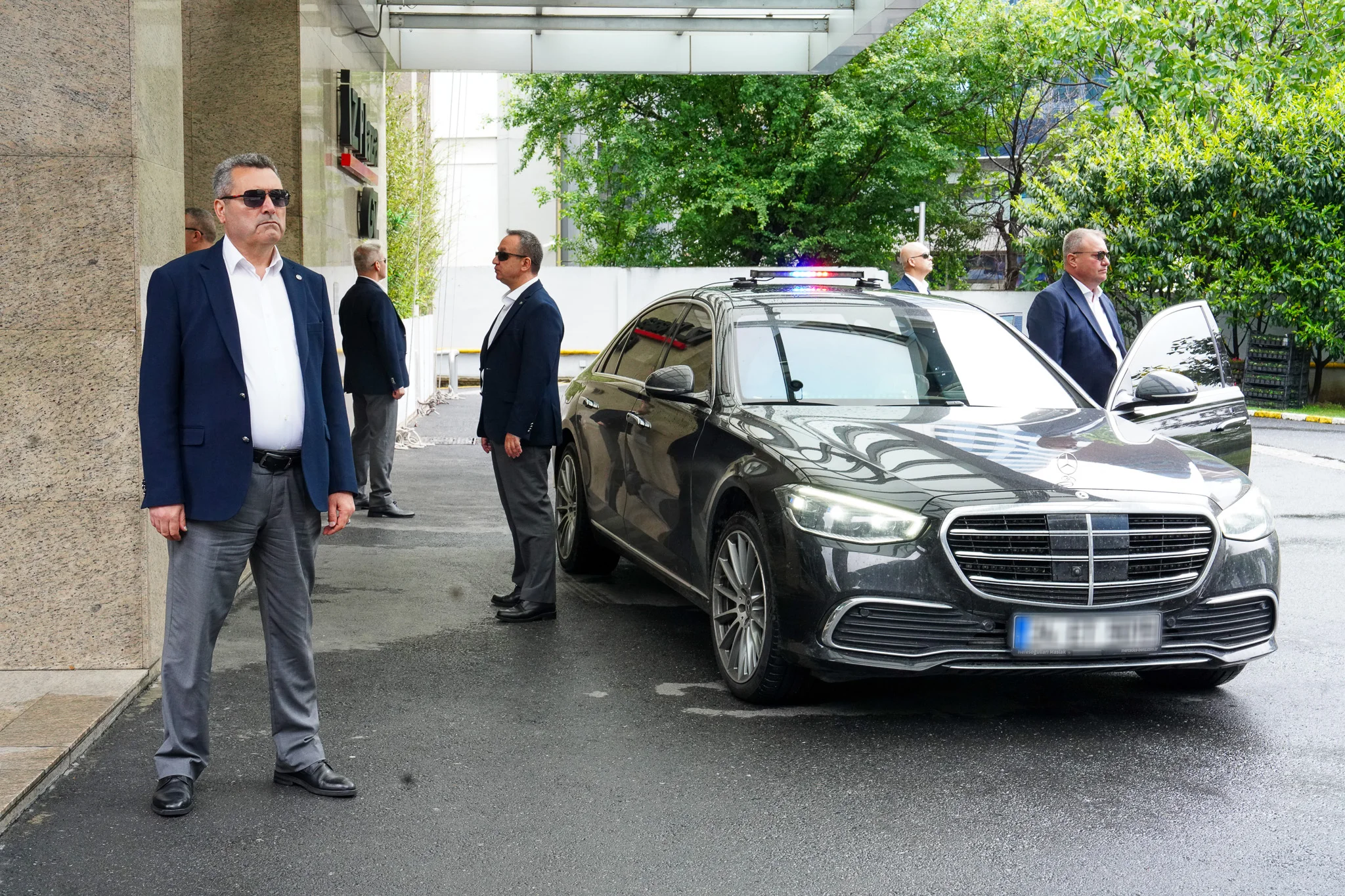
Furthermore, given the high-profile concentration of international business and media across the city’s premier venues, travelers who require an uncompromised perimeter of personal privacy deploy a dedicated istanbul executive protection framework. Vetted security specialists coordinate directly with your driver asset, performing advanced route reconnaissance and securing your transfers through public zones with total discretion and calm professionalism.