Quick Answer:
London’s corporate roadshow spans Mayfair to Canary Wharf — a 45-60 minute transit in peak traffic that makes a dedicated Mercedes S-Class or V-Class with onboard Wi-Fi essential. Single vehicle, single driver, same briefing throughout the day. M4 Corridor arrivals (35-50 min to Mayfair from Heathrow), Canary Wharf access via specific routes and timed drop-offs, and real-time operations desk managing the rolling schedule.
Why Is London the Most Operationally Complex Roadshow City?
London occupies a strange position in the global roadshow circuit. In one sense, it is the most familiar city in the world for international finance — every major investment bank, asset manager, and family office is headquartered within a 4-kilometre arc running from Mayfair through the City to Canary Wharf. The language causes no friction. The infrastructure is world-class. It should be the easiest leg of any European roadshow.
In practice, it is frequently the most operationally complex.
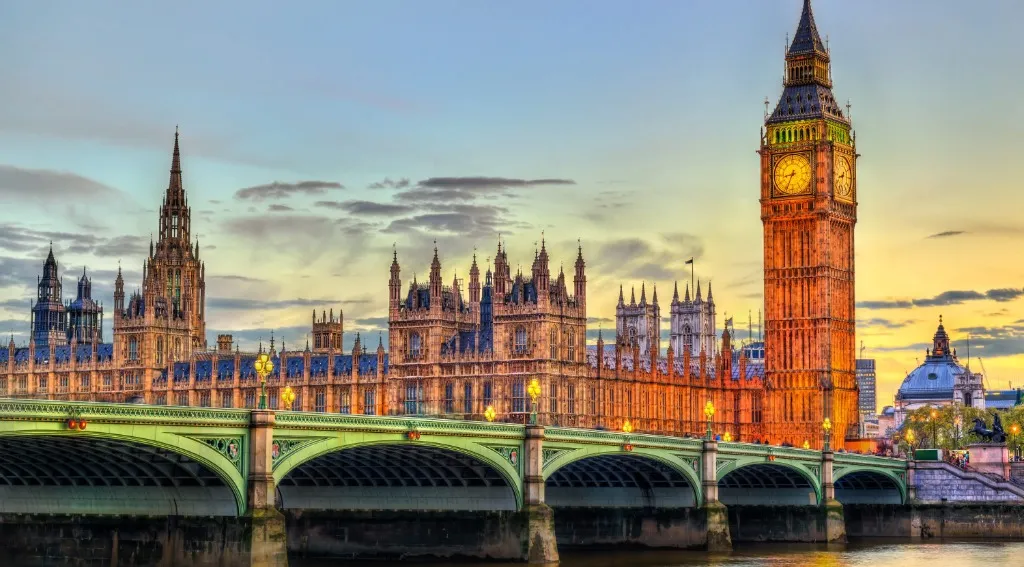
The reason is geography. Mayfair and Westminster — where alternative asset managers, sovereign wealth offices, and private banks are concentrated — sit on the western side of central London. Canary Wharf and the City of London — home to investment banks, pension fund desks, and institutional brokerages — sit on the eastern and south-eastern edge. These two hubs are 6-8km apart as the crow flies, but in peak traffic, the route between them can consume 45 minutes.
A roadshow that tries to shuttle a management team across this divide with multiple separate taxis, or worse, relies on the Jubilee Line and a luggage scramble, is a roadshow that bleeds time, composure, and credibility.
The solution is architectural, not tactical: a single, properly briefed chauffeur vehicle, positioned as a mobile base of operations for the entire day.
How Do You Structure a London Roadshow Day for Maximum Efficiency?
The archetypal London roadshow follows a rhythm the market has evolved over decades. Understanding it is the first step to optimising the ground logistics around it.
What Is the Optimal Arrival Strategy: Heathrow or Farnborough?
For management teams arriving from New York, Toronto, or the Gulf, Heathrow Terminal 5 (BA) and Terminal 4 (Gulf carriers, Cathay) are the most common commercial entry points. From T5 to the first meeting in Mayfair, the journey takes 35-50 minutes in normal traffic — closer to 60-75 minutes during the 7:30-9:30 AM peak.
Teams arriving on private aviation will use Farnborough Airport, which sits south-west of London. Farnborough to Mayfair is a 45-to-60-minute transit depending on M3-to-A316 corridor conditions. The advantage of Farnborough is zero commercial terminal friction — your vehicle meets you on the tarmac apron or at the FBO door, and the transition from aircraft door to car seat takes under three minutes.
The critical variable in both scenarios is pre-positioning. A 7:00 AM wheels-down at Heathrow needs to translate into a vehicle rolling by 7:20 AM. The driver must be in the terminal or on apron 30 minutes before scheduled arrival, tracking the actual flight rather than the scheduled one.
How Do You Handle the Mayfair Morning Block?
The first block of any serious London roadshow takes place in the triangle bounded by Berkeley Square, Grosvenor Square, and Piccadilly — where the large alternative asset managers (Blackstone, Carlyle, Apollo), multi-family offices, and sovereign wealth fund offices are concentrated.
Mayfair is deceptively difficult. Berwick Street, Bond Street, and the surrounding roads operate under loading restrictions that vary by hour. Your driver needs to know which streets allow brief stopping versus which will attract a PCN (£130 fine), and which Berkeley Square entrance actually gets you in front of the correct building without a 200-metre walk in the rain.
A management team running back-to-back 45-minute slots from 8:30 AM through 1:00 PM in Mayfair will cover four to five meetings. Between each slot, they need the vehicle immediately outside — not 300 metres away. This requires a driver who has memorised the specific drop-off and collection points for each address, and who communicates with a back-office team tracking the meeting schedule in real time.
What Is the Critical Transit Strategy Between Mayfair and Canary Wharf?
Reaching Canary Wharf from Mayfair requires crossing central London. The routing options: For delegation logistics, see our corporate delegation logistics.
- Embankment/Blackfriars → DLR-crossover into Canary Wharf: Slower but predictable
- A40 → City via King Edward Street → Canary Wharf via Rotherhithe Tunnel: Faster in reverse-peak but complex
- A13 via Whitechapel: The quickest option from the City, but driver experience matters on this road
What most roadshow coordinators fail to account for is dead time. A slot finishing at 1:15 PM in Mayfair and a 2:30 PM meeting in Canary Wharf sounds like plenty of margin. After a 15-minute venue exit, the transit consumes 35-50 minutes in post-lunch traffic, leaving only 20-30 minutes — barely enough for the team to review their deck and eat a sandwich.
The solution: Build transit time into the actual meeting schedule during roadshow coordination, not compress it on the day.
How Do You Manage the Farnborough Departure Window?
The majority of management teams running a one-day London roadshow depart from Farnborough on a private aircraft to Frankfurt, Paris, or Zurich in the late afternoon. The M25 and M3 toward Farnborough are notoriously congested from 4:00 PM onwards.
A 6:00 PM Farnborough departure with a 5:30 PM requested arrival at the FBO requires the vehicle rolling from Canary Wharf no later than 3:45 PM — frequently before the last meeting finishes. This requires a decision: either schedule the last Canary Wharf meeting to end at 3:30 PM at the latest, or accept that the departure flight will be delayed.
The best-run roadshow operations brief the IR team on this constraint the day before, and structure the last meeting as a light-touch follow-up rather than a primary pitch — giving the team flexibility to exit on schedule.
What Makes a Roadshow Vehicle Different From a Standard London Transfer?
A corporate roadshow is not a point-to-point airport transfer. The vehicle is a working environment for four to seven hours. The requirements are accordingly different.
Connectivity requirements:
- Reliable 4G/5G signal amplifier or portable hotspot (cellular conditions vary across London)
- Patch-in capability for multi-party calls during transit
- Charging ports at every seat position for devices and laptops
Cabin layout considerations:
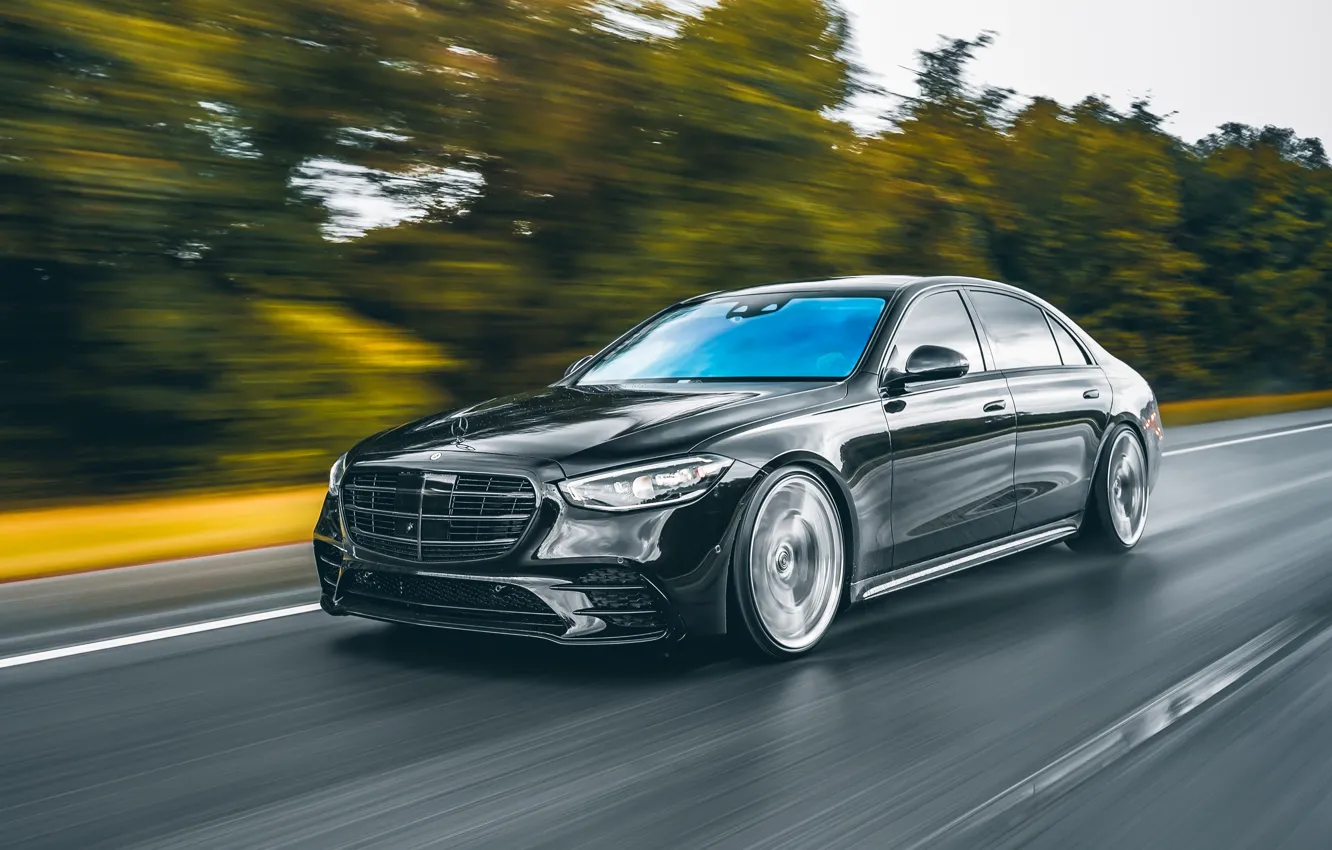
- For a management team of two: Mercedes S-Class provides the most productive workspace — deep rear seats, full legroom, acoustic isolation, centre armrest with charging ports
- For teams of three to four: Mercedes V-Class in corporate configuration (face-to-face seating) enables a working session between venues
- A 45-minute transit between Mayfair and Canary Wharf is a working session if the environment supports it — do not underestimate this
Materials handling:
- Roadshow teams carry investor presentations, due diligence binders, and personal luggage
- The vehicle’s boot needs to accommodate all of it without negotiation
- For teams with multiple stops, the fourth stop requiring removal of everything to find one specific binder is a preventable problem
Confidentiality protocols:
- Conversations in a roadshow vehicle are market-sensitive
- Professional chauffeurs treat in-vehicle conversations as privileged — full stop
- Your driver is neither a listening ear nor a source of information leakage
What Are the Three Most Common London Roadshow Errors?
Having supported dozens of London roadshow deployments, three failure patterns recur consistently.
Why Is Booking Separate Taxis Between Venues a Critical Error?
Booking separate taxis between venues creates three coordination problems: the team has nowhere to wait between meetings, materials are split across multiple vehicles, and each transition becomes a logistics exercise rather than a seamless movement.
The cost saving over a full-day dedicated vehicle is negligible at the per-hour rates London taxis command. A single Mercedes S-Class for a 9-hour day costs less than the accumulated fares from four separate taxi bookings — and produces zero schedule risk.
What ULEZ and Congestion Charge Mistakes Derail London Roadshows?
The central London Congestion Charge zone applies 7:00 AM to 10:00 PM, Monday to Friday — £15 per day for non-compliant vehicles. ULEZ (Ultra Low Emission Zone) covers broader areas with £12.50 daily charge for non-compliant vehicles.
A vehicle that is not compliant with these zones either accrues fines or is unable to access specific venue streets without diversion. Confirm compliance explicitly when booking. Your London roadshow chauffeur service should provide vehicles that are explicitly Congestion Charge and ULEZ compliant.
Why Is Not Briefing the Driver on the Actual Meeting Schedule a Fatal Error?
A driver operating without knowledge of your 2:45 PM meeting running 20 minutes over cannot make intelligent routing decisions. The IR coordinator should share the full day schedule with the operations desk from the outset — this allows the driver to be informed by an operations team monitoring progress throughout the day.
The operations desk communicates meeting delays outward (alerting the next venue) and adjusts routing to absorb time where possible. Without this briefing, the roadshow becomes reactive rather than proactive — and reactive roadshows mean late arrivals.
What ULEZ and Congestion Charge Mistakes Derail London Roadshows?
The central London Congestion Charge zone applies 7:00 AM to 10:00 PM, Monday to Friday — £15 per day for non-compliant vehicles. ULEZ (Ultra Low Emission Zone) covers broader areas with £12.50 daily charge for non-compliant vehicles. See also: Ankara business travel.
A vehicle that is not compliant with these zones either accrues fines or is unable to access specific venue streets without diversion. Confirm compliance explicitly when booking. Your London roadshow chauffeur service should provide vehicles that are explicitly Congestion Charge and ULEZ compliant.
Conclusion: Ground Transportation Is Execution Infrastructure
Booking a London roadshow vehicle with BYZAS is straightforward. Provide your itinerary — arrival airport or Farnborough, meeting venues and times, number of passengers, and any specific vehicle requirements. Our operations team will confirm within two hours.
What to include in your briefing:
- Full day schedule with all meeting addresses
- Flight details or private aviation information
- Vehicle configuration preference (S-Class for 2-3 passengers, V-Class for 4+)
- Any early morning or late evening requirements
- Congestion Charge zone navigation requirements
Contact our London roadshow team: info@byzas.co or via WhatsApp for same-day requests.
Conclusion: Ground Transportation Is Execution Infrastructure
In the current environment — where capital raising requires 8 to 12 face-to-face meetings across multiple London postcodes in a single day — ground transportation is not a support function. It is part of the execution infrastructure.
A management team that arrives at each meeting on schedule, composed, and prepared projects professional rigour. A team that arrives five minutes late, slightly dishevelled from a taxi sprint, having lost 10 minutes searching for a vehicle — projects something else entirely.
The investment in a properly structured, dedicated corporate chauffeur in London is modest relative to the cost of a poorly executed capital raise. Book it early. Brief it fully. Execute it cleanly.
In the current environment — where capital raising requires 8 to 12 face-to-face meetings across multiple London postcodes in a single day — ground transportation is not a support function. It is part of the execution infrastructure.
A management team that arrives at each meeting on schedule, composed, and prepared projects professional rigour. A team that arrives five minutes late, slightly dishevelled from a taxi sprint, having lost 10 minutes searching for a vehicle — projects something else entirely.
The investment in a properly structured, dedicated corporate chauffeur in London is modest relative to the cost of a poorly executed capital raise. Book it early. Brief it fully. Execute it cleanly.
Written by the BYZAS Team. BYZAS is a luxury chauffeur service with over 50 years of operational experience in Turkey, specialising in production logistics, executive transport, and high-security ground operations. Last updated: April 2026.
How to Book Your London Roadshow Vehicle
Booking a London roadshow vehicle with BYZAS is straightforward. Provide your itinerary — arrival airport or Farnborough, meeting venues and times, number of passengers, and any specific vehicle requirements. Our operations team will confirm within two hours.
What to include in your briefing:
- Full day schedule with all meeting addresses
- Flight details or private aviation information
- Vehicle configuration preference (S-Class for 2-3 passengers, V-Class for 4+)
- Any early morning or late evening requirements
- Congestion Charge zone navigation requirements
Contact our London roadshow team: info@byzas.co or via WhatsApp for same-day requests.
External Resources:
- City of London - Vehicle Access Restrictions
- Transport for London - Congestion Charge
- Canary Wharf Group - Estate Access Information
- London Stock Exchange - Financial District Guide
- Farnborough Airport - Private Aviation Services