Quick Answer:
Dubai operates two airports 75km apart: DXB (20-30 min to DIFC, congested FBO) and DWC/Al Maktoum (45-55 min to DIFC, preferred for BBJs/Global 7500s, cleaner FBO). DWC-to-Abu Dhabi via E11: 90-110 minutes. Airport-to-vehicle transition under 4 minutes with correct FBO coordination. For UHNWI principals: Mercedes S-Class with protocol-trained drivers, vehicle pre-positioned at FBO entrance before landing.
Why Does Dubai Require a Two-Airport Understanding for Private Aviation?
The first thing any well-prepared Dubai travel coordinator needs to accept is that Dubai is not one airport city. It is two distinct aviation gateways separated by approximately 75 kilometres — and the choice between them has profound implications for ground transportation timing, routing, and cost.
Dubai International (DXB) remains the world’s busiest international airport by passenger volume. It handles commercial aviation along with a significant portion of private traffic, particularly from operators with slots and relationships at the field. Its proximity to Downtown Dubai, DIFC, and the luxury hotel corridor along Sheikh Zayed Road gives DXB a time advantage for guests staying in central Dubai. A DXB FBO arrival can put a principal in a vehicle within 5 to 10 minutes of wheels-down.
Dubai World Central (DWC) / Al Maktoum International is the dedicated private aviation hub serving the broader Southern Dubai and Expo City corridor. It was designed as the capacity-overflow airport — and in private aviation terms, it has become the preferred base for operators managing larger aircraft (BBJs, Global 7500s, A319 Corporate Jets) that benefit from its longer runways and more spacious ramp environment.
The trade-off is distance: DWC sits 50 kilometres south-west of DIFC. Teams coordinating arrivals into Al Maktoum need to build a genuine 60-to-75-minute transit buffer — not the 35 minutes that occasionally appears on route-planning apps during off-peak hours.
How Do You Handle the DWC to DIFC Route Efficiently?
The journey from Al Maktoum International to DIFC is primarily driven by the Sheikh Mohammed Bin Zayed Road (E311) and its intersection with Al Khail Road — both high-capacity motorways running north-north-east toward the financial district.
Under normal conditions (avoiding 7:30-10:00 AM and 5:00-8:00 PM peaks), the journey takes 45 to 55 minutes. During peak periods, it can extend to 70-90 minutes. The Al Khail Road corridor is generally more reliable than the alternative routing via Sheikh Zayed Road, which carries heavier traffic through Jebel Ali and Dubai Marina.
The critical bottleneck is not the motorway — it is the FBO exit process. Some operators at Al Maktoum handle formalities efficiently; others do not. The ground transportation team should be positioned at the FBO entrance before the aircraft touches down, with confirmed documentation available for the receiving party.
At BYZAS, our Dubai operations team coordinates directly with the FBO’s ground handler from the moment the flight plan is filed — the vehicle is positioned and the driver has the principal’s name and photograph before the aircraft door opens. This is not a detail. In UHNWI principal protection contexts, an uncoordinated arrival creates ambiguity that is counterproductive.
What Makes DIFC Ground Transportation Different from Standard Dubai Transfers?
The Dubai International Financial Centre operates as a financial free zone with its own legal system, courts, and regulatory framework modelled on English common law. It houses the DIFC headquarters of virtually every major bank, private equity house, hedge fund, and family office operating in the Gulf. Its architecture is recognisable — the two towers of the Gate Building straddling the Central Courtyard — and its operational heart is compact enough that most firms are within a 10-minute walk of each other.
For a management team running 4 to 6 meetings within DIFC, ground transportation is most useful for the airport-to-DIFC arrival and departure legs, not for inter-building movement. The Central Courtyard is pedestrian-accessible, and meetings within the DIFC perimeter do not require a vehicle between them. For delegation logistics, see our private aviation ground handling.
Where Dubai executive chauffeur services add consistent value:
- The Abu Dhabi corridor — a full Dubai business day frequently includes a meeting or dinner in Abu Dhabi at ADGM or a royal family office. The drive from DIFC to ADGM via E11 runs 90-110 minutes. A properly configured Mercedes S-Class on this corridor effectively extends the working day without the friction of commercial aviation.
- The Palm Jumeirah and Dubai Marina transfer — many UHNWI guests combine financial meetings in DIFC with accommodation on the Palm or in a luxury Marina hotel. This is a 25-40 minute transit depending on gate access routing for the Palm.
- Evening engagements — Dubai’s social calendar for UHNWI guests involves venues across broad geography: dinner at a venue in Downtown, a private gathering on the Palm, a late departure from a private villa in Jumeirah. A dedicated, pre-briefed vehicle makes this seamless.
What Protocol Expectations Exist for UHNWI Ground Transport in Dubai?
In the Gulf region, professional ground transportation carries a specific set of protocol expectations that differ meaningfully from European or American contexts.
Discretion is architectural, not procedural. In London, discretion means not discussing overheard conversations. In Dubai, discretion extends to the vehicle’s positioning relative to principal movements — which building entrance is used, how long the vehicle is visibly associated with a specific address, and whether photography opportunities are minimised. This is particularly relevant for sovereign wealth principals and royal family-adjacent guests.
Gender and accompaniment protocols require specifically trained drivers for guests accompanied by female family members. Protocol for door handling, seating positioning, and communication — a production of disrespect, however unintentional, creates relationship damage that outlasts the trip.
Punctuality calibration is critical. Dubai’s business culture values punctuality precisely because time compression in the Gulf is extreme. Meetings that would last 90 minutes in New York often consume 25 minutes in Dubai, with substantive relationship-building happening over a subsequent dinner. Missing the start of a meeting by 10 minutes disrupts the schedule of a principal whose day has no slack.
Vehicle presentation must be impeccable. An S-Class with a dust-covered bonnet or an interior that smells of air freshener is conspicuous to anyone operating at this level. The standard in Dubai for UHNWI ground transportation is a vehicle that presents as though it were prepared for an audit.
How Do You Plan the Abu Dhabi Corridor from Dubai?
Abu Dhabi’s finance community — centred on the ADGM on Al Maryah Island — has grown substantially as Abu Dhabi Investment Authority (ADIA) and Mubadala activity has increased and international banks have strengthened their capital positions there. A Dubai-focused roadshow now frequently carries an Abu Dhabi element.
التداعيات اللوجستية واضحة: الطريق E11 من مركز دبي المالي الدولي إلى
Teams that try to compress this — by departing DIFC at 2:00 PM for a 3:00 PM meeting — arrive flustered and late. This is the single worst way to begin a meeting with a Gulf sovereign wealth principal.
Plan the Abu Dhabi transit as a hard constraint from the beginning of roadshow scheduling, not as a variable to be adjusted on the day. Ensure your ground transportation provider has a dedicated Abu Dhabi operational capability — not simply a driver who occasionally takes the route.
What Distinguishes Professional Dubai Ground Transport for UHNWI Clients?
The sophistication of Dubai’s UHNWI and institutional investor community has never been higher. The principals sitting across the table — whether at DIFC, ADGM, or a private family office in Jumeirah — have experienced transportation at every level of quality. They will notice, immediately and without comment, whether the ground logistics reflect their standards.
The Dubai chauffeur service that BYZAS provides is not an amenity — it is part of the quality infrastructure that makes the visit work. From Al Maktoum tarmac to DIFC meeting room, from the Abu Dhabi corridor to an evening Palm Jumeirah dinner, every movement is pre-planned, briefed, and executed without a single coordination phone call from the principal’s team.
That is the standard. Anything less is not the standard.
What Vehicle Configuration Is Required for Dubai Private Aviation Transfers?
For Dubai private aviation ground transportation, vehicle choice depends on three variables: principal group size, cargo requirements, and visibility protocol. The Mercedes S-Class serves two-to-three principals without luggage compression — the acoustic isolation and working environment are appropriate for post-flight debriefs and pre-meeting preparation. For teams of four or more, or principals travelling with security detail and equipment, the Mercedes V-Class in executive configuration provides the necessary cabin volume without compromising on presentation standard. See also: executive itinerary coordination.
The Palm Jumeirah and Jumeirah Bay corridor — where many UHNWI principals maintain residential addresses — requires vehicles registered for gated community access. Not all chauffeur services hold these registrations. Confirm access capability explicitly when booking for Palm or Emirates Hills addresses.
How Do You Coordinate Dubai Airport FBO Services with Ground Transportation?
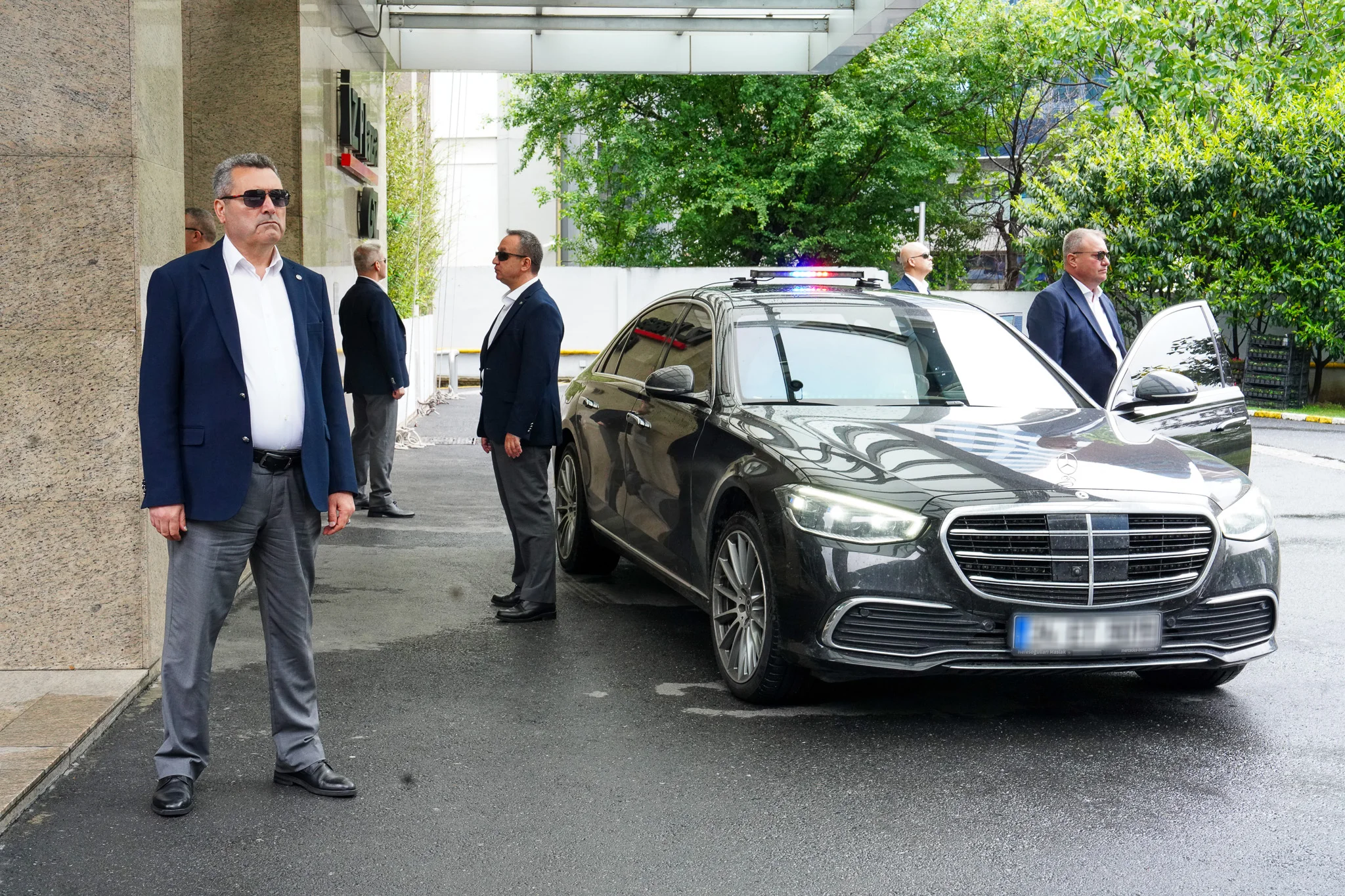
The FBO-to-vehicle transition is where most Dubai private aviation arrivals fail. The sequence matters: the ground handler completes customs and immigration documentation while the chauffeur vehicle is pre-positioned at the FBO apron exit — not waiting in a car park. BYZAS operations desk coordinates directly with the FBO ground handler from the moment the flight plan is filed, ensuring the vehicle is in position before the aircraft door opens.
For DXB Terminal 2 private aviation arrivals, the FBO handling (typically DNATA or Emirates Flight Catering) processes principal documentation while the vehicle waits in the authorised zone. The transition from aircraft steps to vehicle seat should take under 5 minutes under normal conditions.
What Are the Peak Traffic Hours to Avoid in Dubai?
Dubai road network peaks create predictable congestion windows that any well-structured Dubai ground transportation plan must account for. The morning peak runs from 7:30 AM to 10:00 AM, centred on the Sheikh Zayed Road corridor through Business Bay and the Financial Centre Road into DIFC. The evening peak begins at 5:00 PM and extends to 8:00 PM, with the most severe congestion on the E311 (Sheikh Mohammed Bin Zayed Road) and Al Khail Road.
For airport transfers, the critical window is departing any Dubai address for DXB or DWC during morning peak. A 9:00 AM international departure from DXB requires departure no later than 7:00 AM from DIFC addresses. For DWC departures, the same 9:00 AM wheels-up requires a 6:00-6:30 AM departure from DIFC — earlier than most coordinators instinctively plan.
How Does BYZAS Handle Multi-Day Dubai VIP Deployments?
A multi-day Dubai deployment — whether for a single principal or a management team running back-to-back DIFC and Abu Dhabi meetings — requires structural continuity that individual transfer bookings cannot provide. BYZAS Dubai operations assigns a dedicated vehicle and driver for the full deployment period: same driver who understands the principal’s preferences, the same vehicle pre-configured for their requirements, and a single operations contact managing all logistics.
For sovereign wealth and royal family-adjacent deployments, BYZAS provides drivers with specific Gulf protocol training — not simply safe drivers, but operatives who understand the communication standards, door handling protocols, and proximity expectations that apply in these contexts.
The Dubai luxury hospitality environment — from Burj Al Arab to Four Seasons Resort — maintains its own ground transportation expectations. BYZAS drivers are briefed on venue-specific protocols for each property, ensuring the arrival experience is consistent from aircraft door to hotel lobby.
Written by the BYZAS Team. BYZAS is a luxury chauffeur service with over 50 years of operational experience in Turkey, specialising in production logistics, executive transport, and high-security ground operations. Last updated: April 2026.
External Resources:
- Dubai Airports - DWC Information
- DIFC - Dubai International Financial Centre
- ADGM - Abu Dhabi Global Market
- UAE Civil Aviation Authority
- Dubai Tourism - Business Events