Quick Answer:
Turkey’s film production logistics demand a Pod System of 3-4 Mercedes Sprinters (not 50-seater coaches) for Istanbul’s narrow historical streets, plus advance Ministry of Culture and Tourism permits to avoid set shutdowns. With up to 30% tax rebate eligibility, 24/7 Safe Set security protocols, and GAT/IST/SAW airport coordination for crew and gear, BYZAS manages productions across Istanbul, Cappadocia’s off-road terrain, and Antalya’s coastal sets.
NDA-Compliant Crew Shuttles & Heavy Equipment Fleet Coordination
International streaming productions (Netflix, HBO, Amazon Prime Video, Apple TV+, Disney+) require set security standards that go beyond standard transport agreements. BYZAS operates under project-specific NDA protocols for every production engagement — drivers and operations staff sign production-embedded non-disclosure agreements before day one, with contract termination clauses for any protocol breach.
NDA Enforcement Standards:
- All chauffeurs and operations personnel sign production-specific NDAs prior to commencement
- Mobile phones secured in sealed pouches during active set periods (device-free protocol)
- No photography, social media check-ins, or location disclosure by any BYZAS personnel
- Violation triggers immediate contract termination with no compensation
Heavy Equipment Fleet Coordination:
Istanbul’s production traffic management requires UKOME (Ulaşım Koordinasyon Merkezi) permits for crew trucks and equipment vehicles in excess of 3.5 tonnes GVW. UKOME applications filed minimum 72 hours in advance. Large-scale productions require İstanbul Büyükşehir Belediyesi coordination for multi-vehicle convoy routing.
| Vehicle Type | Role | Configuration |
|---|---|---|
| Mercedes Sprinter (13-16 seat) | Crew transport — departmental pods | High-roof standing room, AC-reinforced, deep luggage for equipment cases |
| Mercedes V-Class (100% blacked-out) | Talent and VIP transport | Privacy partitions, Starlink/5G Wi-Fi, reclining beds |
| Mercedes Maybach | Executive producers, directors | Mobile office configuration |
| Kit Vans | Equipment transport | Custom shelving for cine-lenses, lighting kits, sound gear; reinforced locks; GPS tracking |
| 4x4 Support Vans | Cappadocia/off-road terrain scouting | Reinforced tyres, dust filtration, high ground clearance |
Shuttle Cycle Management: Set–hotel–location 7/24 continuous Sprinter/Minibus shuttle cycle managed via central dispatch with encrypted radio channels for equipment-talent synchronization. Pod system (3-4 Mercedes Sprinters per department) prevents single-point-of-failure in crew movements across Istanbul’s historic districts.
Why Has Turkey Become a Premier Production Hub in 2026?
Turkey has emerged as one of the world’s most sought-after locations for cinematic masterpieces, high-budget commercials, and international television series in 2026, with the country offering visual diversity unmatched by almost any other single territory — from the Grand Bazaar in Istanbul (featured in James Bond’s Skyfall) to the lunar landscapes of Cappadocia and the sun-drenched coastal sets of Antalya.
The driving factors are economic and geographic: Turkey’s ‘Filming in Turkey’ tax rebate programme offers up to 30% on qualifying local production expenditure for eligible international co-productions. Location diversity within a single territory reduces multi-country logistics overhead. English-speaking production coordinators are widely available. And the cost structure is 40-60% below equivalent Western European production environments.
Behind every successful international production lies a complex logistical engine. Turkey is not a ‘light’ environment — its 16-million-person urban density, specific bureaucratic requirements, and two-continent geography demand a level of logistical mastery that separates a smoothly running set from a costly operational nightmare. Whether you are a local line producer or an international production manager, understanding the nuances of Turkish logistics is the difference between capturing the perfect shot and losing your filming window to a traffic jam or a missing permit.
What Permits Are Required to Film in Turkey?
All international productions must obtain a general filming permit from Turkey’s Ministry of Culture and Tourism before any shoot begins. Attempting to film without the proper paperwork in high-visibility areas like Sultanahmet or the Bosphorus will result in immediate police intervention and potential equipment impoundment.
The permit structure operates at multiple levels:
- Ministry of Culture and Tourism permit — your general authorisation to operate in Turkey. Timeline: 10-15 days (up to 20 days in peak season May–September). Requirements include full synopsis, crew list, equipment list, and detailed location list.
- Local district municipality permits — required for street closures in specific districts (Belediye). Timeline: 5-7 days. Requires exact map of the closure area.
- Historical site permits — required for filming at museums and protected archaeological zones. Timeline: 7-10 days. Per-day fee schedule applies.
- Drone/aerial permits — required from Turkey’s Civil Aviation Authority (SHGM) for any drone over 500g. Timeline: 15+ days. Pilots must hold Turkish-equivalent certification.
International crews are legally required to work with a licensed local co-producer or production service company. This provider is responsible for crew conduct and ensures compliance with Turkish tax and labour regulations.
Key regulation note: Drone flights near the Bosphorus or government buildings are classified as No-Fly Zones without highest-level security clearance. Unauthorized flights result in immediate drone confiscation and significant fines.
Why Is Istanbul the Most Complex Production Location in Turkey?
Istanbul presents a unique 24/7 logistical puzzle — 16 million people across two continents, consistently ranking among the world’s top 3 most congested cities for traffic. Moving a 50-person crew and four trucks from Galata (European side) to the Asian side via the bridges can take 3 hours in afternoon peak traffic. For delegation logistics, see our production logistics coordination.
Bridge crossing restrictions add specific complexity: The 1st and 2nd Bosphorus Bridges have weight and height restrictions that force larger equipment trucks to use the 3rd Bridge (Yavuz Sultan Selim) — adding 45km to the journey. The Eurasia Tunnel bypasses bridge traffic for smaller support vans but has its own height restrictions.
The Pod System is the solution for large crew movements:
- Use 3-4 Mercedes Sprinters instead of one large coach
- If Camera Dept wraps early, one Pod can return to the hotel without waiting for the entire crew
- Parking is significantly easier for Sprinters vs. 50-seater coaches in historic districts
- Segmented departure times for crew vs. equipment trucks prevents bridge bottleneck cascade
Basecamp planning requires 72+ hours advance coordination. We work with local municipalities to secure parking for Sprinter fleets and generator trucks at least three days before call time — in central Istanbul this is not achievable without prior arrangement.
What Makes Cappadocia a Logistical Challenge for Production Teams?
Cappadocia’s lunar landscape — volcanic tuff, narrow valley paths, unlit rural roads — is a cinematographer’s dream and a logistics nightmare. Standard luxury sedans cannot reach the best scouting spots or remote valley sets. The terrain is unpredictable, and dust is a constant threat to sensitive camera equipment.
Key Cappadocia operational requirements:
- 4x4 support vans and reinforced tyre Sprinters with filtration systems are non-negotiable for valley work
- 3:00 AM call times are standard to catch hot air balloon launches in optimal morning light — drivers must be trained in nocturnal navigation on unlit rural roads
- Extreme temperature management — summer heat (40°C+) and winter cold require vehicles with robust climate control and crew rest cycle management
- Local cave-hotel basecamps require advance coordination for crew accommodation and vehicle parking in irregular terrain
GPS often fails in Cappadocia’s backstreets — our drivers possess local geographic mastery that standard navigation systems cannot provide.
What Fleet Specifications Does a Production Need in Turkey?
The standard for professional production transport in Turkey is the Mercedes-Benz line. Using substandard domestic vehicles may save short-term cost but leads to breakdowns that cost thousands in production downtime.
| Vehicle Type | Use Case | Configuration |
|---|---|---|
| Mercedes Sprinter (13-16 seat) | Crew transport — departmental (Camera, G&E, Art Dept) | High-roof standing room, AC-reinforced, deep luggage for equipment cases |
| Mercedes V-Class | Talent and VIP transport | 100% blacked-out glass, privacy partitions, Starlink/5G Wi-Fi, reclining beds |
| Mercedes Maybach | Executive producers, directors | Mobile office configuration |
| Kit Vans | Equipment transport for small commercials/documentaries | Custom shelving for cine-lenses, lighting kits, sound gear; reinforced locks; GPS tracking |
| 4x4 Support Vans | Cappadocia/received terrain scouting | Reinforced tyres, filtration systems, high ground clearance |
All production vehicles should include: GPS tracking for real-time coordination, encrypted communication for security-sensitive movements, and secure overnight parking protocols for equipment vehicles.
How Does BYZAS Handle “Safe Set” Protocols for High-Profile Talent?
“Set Security” differs from standard bodyguard work — the goal is a “Safe Set” where the creative process is not interrupted by security theatre.
For high-profile productions, BYZAS provides:
- Advance Reconnaissance — security drivers arrive 60 minutes before talent to secure immediate parking and exit routes
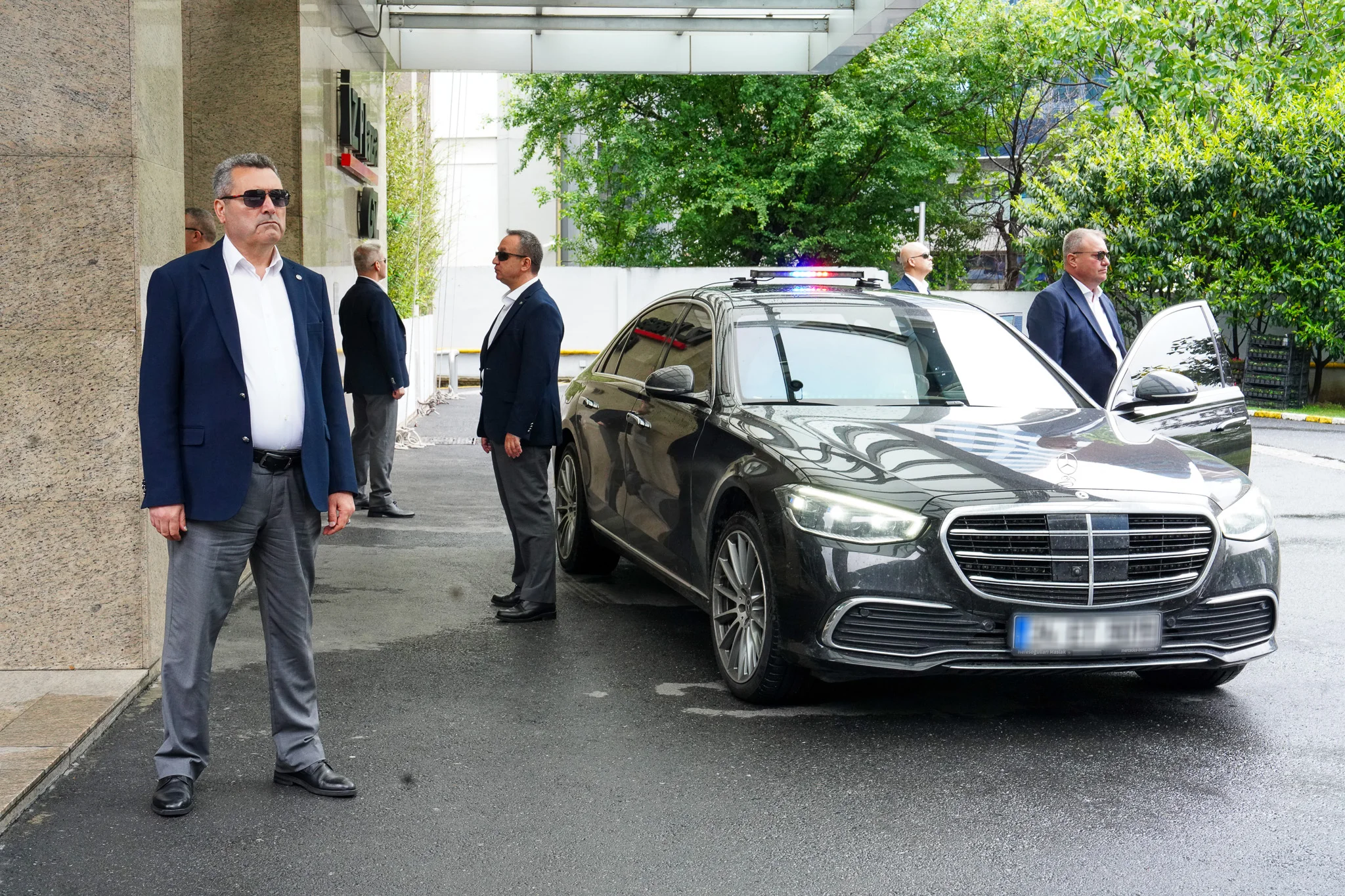
- Discreet Proximity Protection — security-trained chauffeurs present enough to protect, quiet enough to let talent focus on performance
- Emergency Extraction Routes — secondary ‘hot’ routes mapped in real-time for security breach or medical emergency
- Logistical Buffer Management — crowd control at high-visibility locations (Sultanahmet, Grand Bazaar) through de-escalation, not heavy-handed intervention
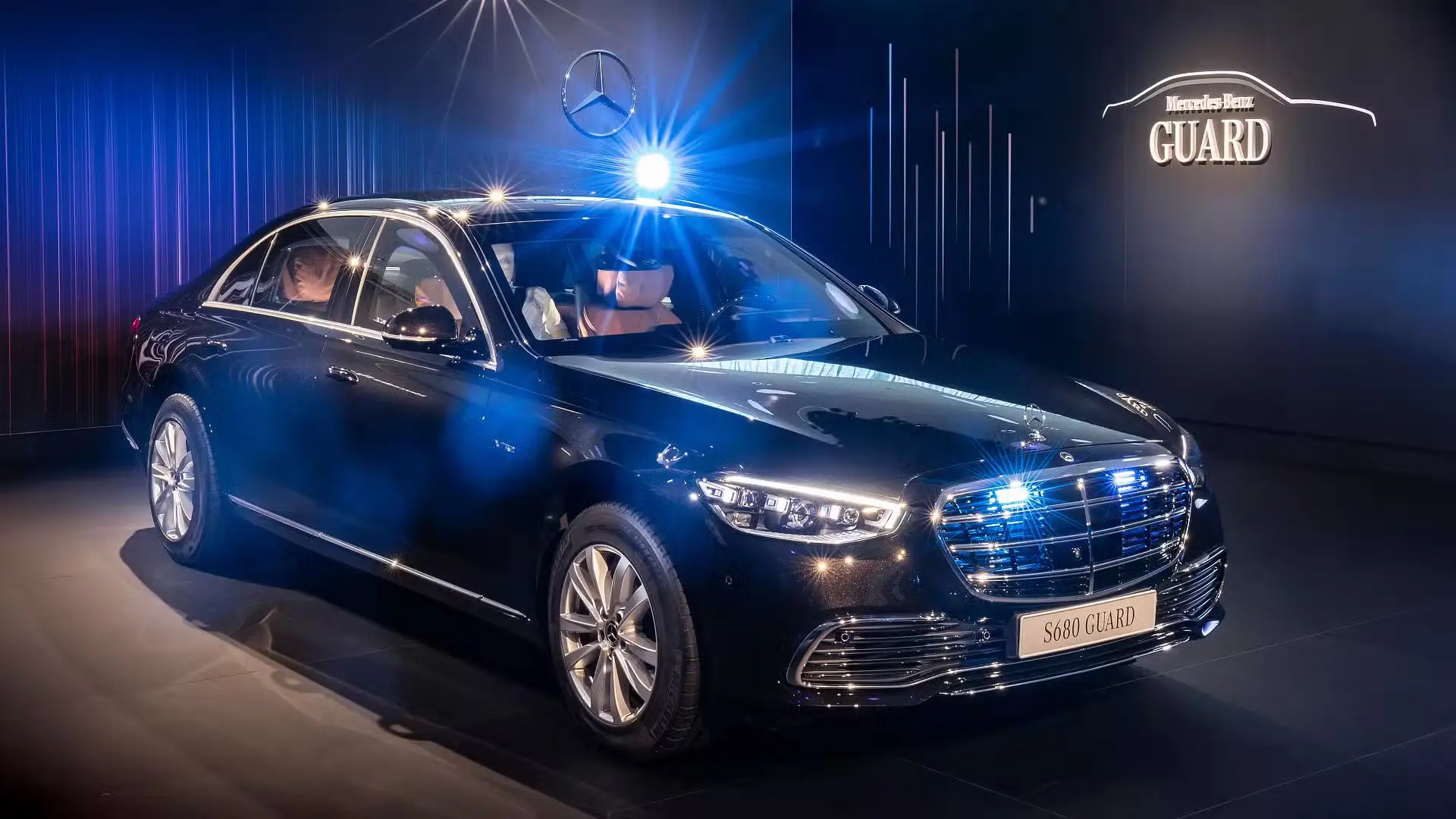
For sensitive diplomatic filming or documentaries in elevated-threat regions, BYZAS provides B6-level armored vehicles (S-Class Guard or G-Class Guard) that blend in with the standard production fleet to maintain low profile.
All security staff sign production-specific NDAs and undergo regular confidentiality refresher training.
What Does a 100-Vehicle Production Look Like in Practice?
A recent international production in Istanbul required movement of 200-person crew across 15 locations in 10 days:
- 12 VIP V-Classes for talent and producers
- 40 Mercedes Sprinters for crew departments
- 10 Kit-Vans for technical gear
- 5 Armored Sedans for high-profile investors
The operational key was a centralized Logistics Hub — every driver tracked via GPS, coordinated via central dispatch. This allowed real-time rerouting when Marmaray tunnel traffic spiked or when a location permit was shifted by two blocks.
Real numbers: simultaneous 100+ vehicle movement requires pre-positioning of 40% of the fleet the night before, driver rotation planning for routes exceeding 4 hours, and a staffed operations desk operating 24/7 throughout the production.
What Should a Producer’s 72-Hour Mobilization Checklist Include?
If you are 3 days from Day 1 on a Turkish set, your logistics provider should confirm: See also: secure crew transport.
- All local district permits (Beyoğlu, Fatih, etc.) cross-referenced with Ministry permit
- Lead driver has physically driven the route in a vehicle of the same height/width as production trucks
- VIP vans equipped with required privacy partitions and catering storage
- Every driver has encrypted group chat active for real-time traffic and security updates
- Overnight security watch scheduled for basecamp parking if equipment stays on trucks
- All drivers carry SRC-2 and SRC-4 commercial driving licenses (impoundment and fines if missing)
- ATA Carnet documentation confirmed for temporary import of equipment
- Communication protocol established between crew lead and equipment transport team
Written by the BYZAS Team. BYZAS is a luxury chauffeur service with over 50 years of operational experience in Turkey, specialising in production logistics, executive transport, and high-security ground operations. Last updated: April 2026.
External Resources:
- Turkish Ministry of Culture - Film Production Permits
- Turkish Civil Aviation Authority - Drone Regulations
- IMDB - International Film Productions in Turkey
- Istanbul Film Commission