Quick Answer:
International streaming productions in Turkey require Mercedes Sprinters for crew (not standard coaches), NDA-bound drivers with no-photography/no-phone policies, and multi-city coordination across Istanbul, Antalya, Cappadocia, and Aegean coast simultaneously. Up to 30% tax rebate on qualifying spend. BYZAS deploys additional vehicles within 2-4 hours, maintains in-house presence in all 5 major production centres, and runs 24/7 dispatch for last-minute call sheet changes and flight delays.
Why Do International Streaming Productions Choose Turkey as a Filming Destination?
Turkey ranks among the top 10 most active filming territories for international streaming platforms in 2026, according to industry production trackers. The country offers a unique combination of competitive production costs, geographic diversity, and a mature technical infrastructure that few territories can match at this price point.
Turkey operates a tax rebate scheme of up to 30% on qualifying local production expenditure for eligible international co-productions under its Film Production Incentive Programme, administered by the Ministry of Culture. At the budget scale of a streaming series — where typical episode costs range from USD 8-15 million — a 30% rebate represents a material financial shift in production viability.
Location diversity within a single territory is a major factor. A production can film:
- A Mediterranean coastal sequence in Antalya
- A desert plateau scene in Cappadocia
- A period Ottoman interior in Istanbul
- A modern corporate exterior in Ankara
All within a single week’s schedule, without crossing borders. This reduces logistics complexity, travel costs, and talent management overhead significantly compared to multi-country shoots.
The local crew infrastructure is deeper than most Western European alternatives. Decades of domestic television production — Turkey produces over 150 domestic series annually — have built an experienced below-the-line talent pool: camera operators, gaffers, art department professionals, and location managers who understand high-volume episodic production rhythms. International productions arrive with their key creative team and find a capable local crew already in place, substantially reducing onboarding time.
Key advantages at a glance:
- Up to 30% tax rebate on qualifying local spend
- 7 climate zones within one territory (Mediterranean, desert, alpine, urban)
- 150+ domestic series production experience creates skilled crew pool
- No border crossing required for diverse location needs
- English-speaking production coordinators widely available
- Production costs 40-60% below Western Europe
The result is a filming calendar that has become increasingly dense, with multiple major international streaming productions running concurrently across Istanbul, Antalya, Bodrum, and Cappadocia at any given time.
What Ground Transportation Challenges Do Streaming Productions Face in Turkey?
The primary challenge is scale. A streaming series operating at full volume typically involves:
- 10-15 principal actors and supporting cast
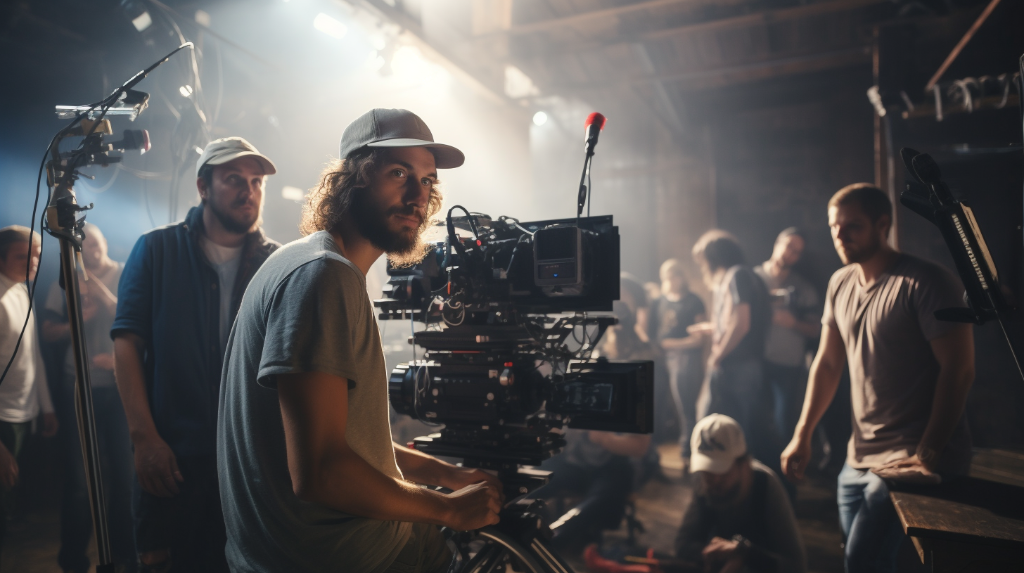
- 150-250 below-the-line crew members
- Equipment footprint spanning 4-5 specialist departments (camera, grip, lighting, sound, art)
- Simultaneous multi-location filming across 2-4 sites per day
Getting all of that moving simultaneously — and correctly — every day for months requires a logistics operation that operates at production-department level, not a standard car hire arrangement.
Istanbul presents specific geographic complexity. The city spans two continents, and its historic districts (Sultanahmet, Eminönü, Balat) impose strict weight and height restrictions on commercial vehicles. Bridge crossings between the European and Asian sides create predictable bottleneck windows: morning rush (07:00-09:30) and evening rush (17:00-20:00) can add 45-90 minutes to cross-continental transfers that should take 20 minutes. Productions learn this quickly — and plan around it.
Cappadocia and the Antalya region introduce inter-city logistics. The distance between Istanbul and Cappadocia is approximately 640km (7-8 hours by road). Antalya is 480km from Istanbul. For productions extending to these regions, overnight driver rotation, vehicle pre-positioning, and regional base camp logistics become essential planning considerations — not optional extras.
Confidentiality requirements are non-negotiable. Streaming platforms maintain rigorous pre-release information controls. Every driver, dispatcher, and operations manager who sees a call sheet, a location address, or a cast member’s schedule must operate under formal NDA conditions. This means:
- No social media activity referencing production
- No personal photography at locations
- No informal discussion of production details with anyone outside the production bubble
- No disclosure of cast or crew schedules
For a transport provider, enforcing these standards across a 30+ vehicle fleet is a genuine operational challenge — not a checkbox exercise.
The around-the-clock nature of production is critical. Wrap times shift. Night shoots extend past 02:00. A flight delay brings a principal actor in at 03:00 rather than the scheduled 21:00. The transport desk needs to function 24 hours, not close when the office does.
What Fleet Specifications Does a Production-Grade Transport Partner Need?
Fleet depth and specification matter at production scale. A streaming series of meaningful volume needs more than a handful of luxury sedans. The required fleet includes:
- Mercedes Sprinters (crew configuration, 12-15 seat) for below-the-line crew transport
- VIP vans (Mercedes V-Class or equivalent) for cast and key creatives
- Equipment vans with GPS-tracked secure racking systems — camera packages, lighting rigs, and grip equipment each have specific securing requirements
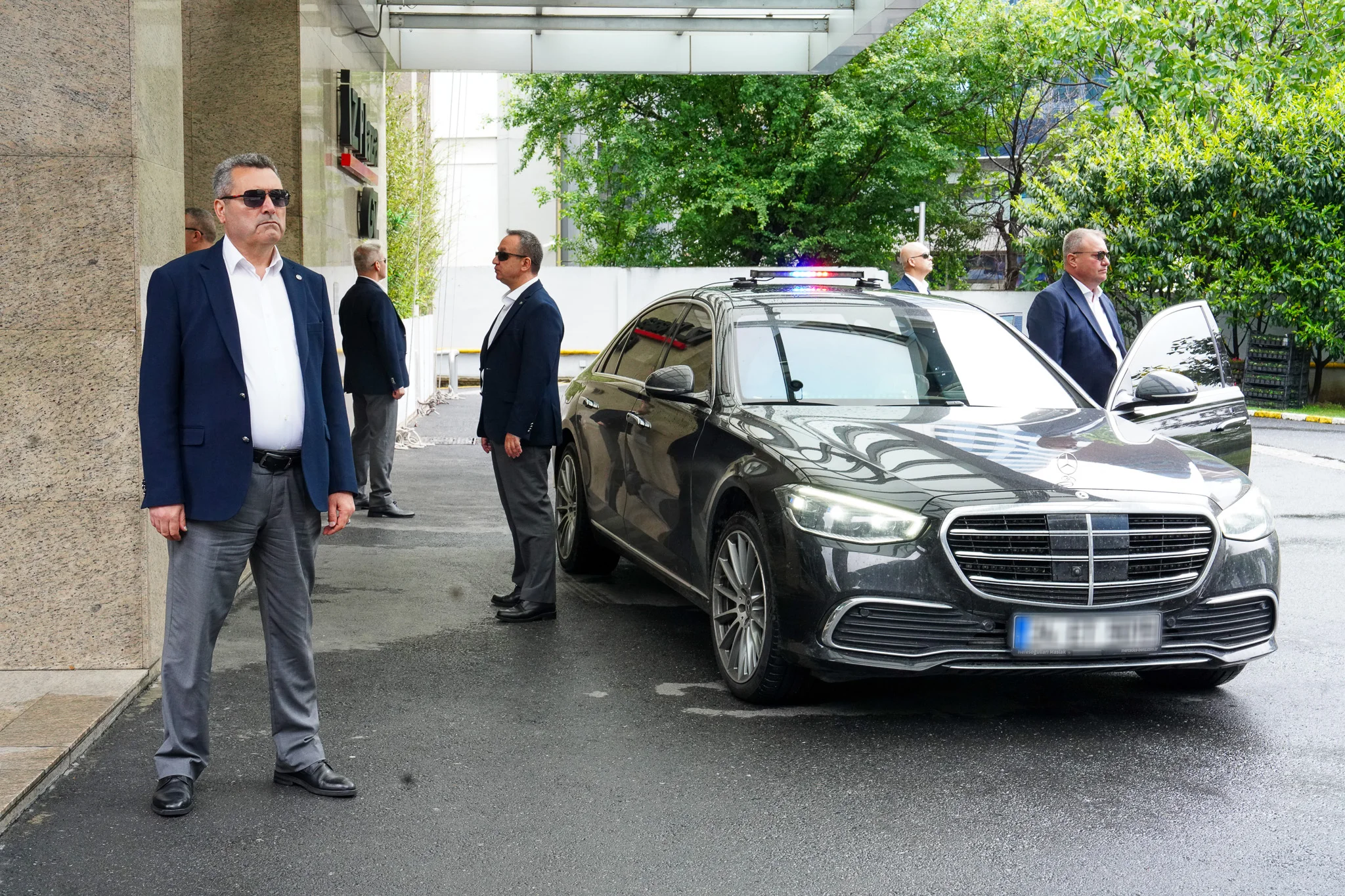
- Executive vehicles (Mercedes S-Class or equivalent) for above-the-line personnel: directors, DPs, producers
- Secure overnight parking facilities for equipment between shoot days — a vehicle left unattended with £200,000+ of camera equipment inside is an unacceptable risk
The ability to scale across all categories simultaneously — rather than juggling between separate providers — is a significant operational advantage.
What National Operational Coverage Does a Transport Partner Need?
National operational coverage, not city-based pretending. A provider based exclusively in Istanbul cannot credibly manage a scout run to Cappadocia or a shoot day in Bodrum without subcontracting. Subcontracting introduces:
- Inconsistent vehicle quality
- Unfamiliar drivers with no production protocol training
- No accountability chain when something goes wrong
- Confidentiality breach risk with unknown subcontractor staff
Genuine nationwide capability means drivers, vehicles, and operational oversight already in place across Turkey’s major production centres — not acquired on an ad hoc basis.
What Protocol and Discretion Training Does a Transport Partner Need?
Production protocol and discretion training separate professionals from chauffeurs. The drivers handling cast and key creatives need to understand:
- Call times and turnaround rules
- The difference between a principal actor and a day player — and why this matters for scheduling
- Location confidentiality protocols
- How to handle press or public encounters near filming locations
- Vehicle preparation standards for early morning calls vs. night shoots
This is not a standard taxi service skillset. It is a specific professional orientation built into operations through structured training and ongoing production engagement.
What 24/7 Operations Capability Does a Transport Partner Need?
A 24/7 staffed operations function — not an after-hours voicemail. The difference between a production-grade transport operation and a standard car service is measured in how it handles the unexpected. At 02:30, when a flight is delayed and the call sheet changes, you need a real human who knows your production, your people, and your vehicles — not a voicemail box that will be checked tomorrow morning.
What Does Multi-City Production Coordination Look Like in Practice?
Coordinating simultaneous movements across Istanbul, the Aegean coast, and Central Anatolia requires more than a phone call to a local operator. Productions extend across regions where geography, road conditions, and logistics change character entirely. A transport partner with genuine national reach can:
- Pre-position vehicles at regional bases the night before scheduled shoots
- Rotate drivers across long-distance routes without violating working-hour regulations
- Manage handoffs between regions without introducing delays that cascade through the schedule
- Maintain real-time communication across all locations via a single dispatch desk
The practical advantage for a line producer is operational simplicity: one contract, one service standard, one operations contact covering the full geographic scope of the production. No juggling between regional operators, no quality variance between cities, no last-minute subcontracting when a shoot moves beyond the initial coverage plan.
For productions running simultaneously in Istanbul and Antalya, this means:
- Istanbul-based crew transported to set by 06:00 via pre-positioned fleet
- Antalya-based crew served by a separate regional team operating from a local operations point
- Inter-city equipment transfers managed via secure overnight courier routes
- Central dispatch tracking all vehicles in real-time via GPS
How Is Production Equipment Transported Securely in Turkey?
Production equipment demands separate logistics consideration. Cameras, lighting rigs, grip equipment, and continuity props each have specific handling and securing requirements. Drivers need to understand both the value and fragility of what they are transporting — and the financial liability this represents.
GPS tracking across the entire fleet is non-negotiable for productions with international insurance requirements. Production coordinators need real-time visibility on equipment location throughout each transfer. If a camera package is in transit between locations, the production manager needs to know exactly where it is, not have to call the driver and hope for an accurate ETA.
Secure overnight storage is a critical and often underestimated requirement. A vehicle left unattended outside a hotel with £200,000+ of camera equipment inside represents an unacceptable combination of financial risk and production vulnerability. Professional production transport providers maintain:
- Secure, monitored parking facilities for overnight equipment storage
- Chain-of-custody protocols for all equipment under their management
- Background-checked staff with no subcontractor involvement at any stage
Equipment categories requiring specialist handling:
- Camera packages (RED, ARRI, Sony) — shock-sensitive, high-value
- Lighting rigs (ARRI SkyPanel, Quasar) — electrical safety + physical fragility
- Grip equipment (C-stands, sliders, cranes) — physical hazard if poorly secured
- Continuity props and costume items — chain-of-custody for continuity integrity
What Does 24/7 Production Support Actually Mean?
Production schedules do not respect business hours — and neither does a genuine production transport operation. A staffed operations desk handles:
- Flight delays arriving at 02:00 (international arrivals often land in the early morning hours)
- Early morning pickups for dawn calls (first crew call can be 05:00)
- Wrap times extending past midnight on night shoot days
- Last-minute schedule adjustments that reprioritise vehicle movements
- Crew rest rotation between calls — drivers who have been on for 14 hours need relief, not a second shift
Real-time schedule adjustments and coordinated vehicle repositioning are standard operational features for productions working with a production-grade transport provider. The dispatch team maintains direct contact with production coordinators throughout each shoot day — not just at handover points.
Working hour compliance is a legal requirement in Turkey for transport operators, with specific regulations governing professional driver rest periods under European transport standards adopted by the Turkish Ministry of Transport. Productions operating long-hour schedules need a transport partner who understands these requirements and manages driver rosters accordingly — both for legal compliance and crew safety.
How Does Ground Transportation Affect Crew Welfare and Readiness?
Production days are long and physically demanding. A crew call at 05:00 means a crew member’s day starts at 04:00. The vehicle that collects a team at 05:00 for a dawn call needs to offer more than basic transport — it needs to allow the crew to rest, prepare equipment, and arrive at set in usable condition.
The difference between standard crew transport and production-grade welfare transport:
- Climate control for summer shoots in Anatolia (temperatures regularly exceed 38°C in July-August)
- Appropriate luggage space for personal equipment bags, cases, and production-critical personal items
- Route planning that avoids unnecessary delays — a 45-minute detour through city traffic is not neutral when you have 20 minutes to prepare before first shot
- Communication — crew should know estimated arrival and any route changes, not wonder if the transport is coming
For cast members, the standard extends further. Principal actors and key creatives require vehicles that offer a professional, comfortable environment between locations — not just a means of getting from A to B. The vehicle is often the only decompression space between takes, between locations, and between shooting days.
Mercedes S-Class and V-Class configurations address this requirement without introducing the informality of standard crew transport. Climate-controlled, quiet, professionally driven — these vehicles are a working environment, not just transport.
For detailed information on production transport in Turkey — including fleet specifications, operational coverage, and NDA protocols — visit the BYZAS production logistics page.
Written by the BYZAS Team. BYZAS is a luxury chauffeur service with over 50 years of operational experience in Turkey, specialising in production logistics, executive transport, and high-security ground operations. Last updated: April 2026.
External Resources: