Quick Answer:
Istanbul’s flight crew layover operations demand a Zero-Delay Policy backed by live ADS-B flight tracking, pre-positioned Mercedes vehicles arriving 20 minutes before wheels-down, and 24/7 multilingual dispatch covering EASA/FAA rest regulations. With 200+ vehicle fleet, 35-70 minute IST-to-hotel transit times, and direct airside clearance at both IST and SAW, BYZAS manages the complete Hotel-Airport-City triangle for international carriers — ensuring zero crew grounded incidents due to ground transport delays.
Why Does a 99% Punctuality Rate Fail in Aviation Crew Logistics?
In aviation logistics, a 99% punctuality rate is a failure. A 1% failure rate means that out of 100 crew rotations, one flight will be delayed or cancelled due to ground transport issues — at a cost measured in tens of thousands of dollars per incident in fuel burn, missed slots, and EU passenger compensation requirements.
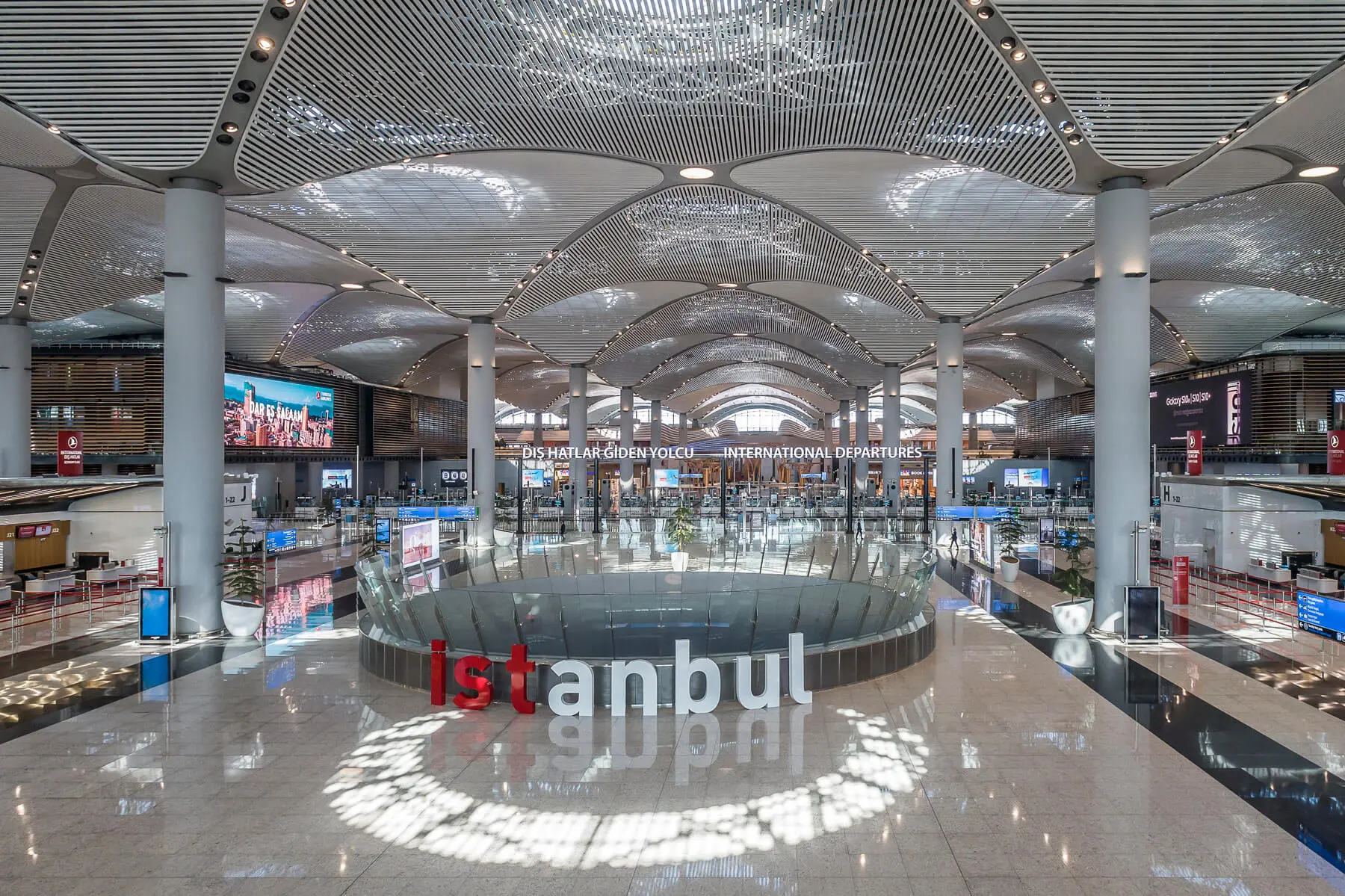
Istanbul manages thousands of flight crew rotations daily across two major airports: Istanbul Airport (IST), now one of the world’s largest global hubs, and Sabiha Gökçen (SAW) for regional and low-cost carriers. For an airline, the cost of a delayed crew extends far beyond the immediate delay — it cascades through the entire network.
At BYZAS, we operate under a strict Zero-Delay Policy built on three operational pillars:
- Real-Time ADS-B Data Integration — We monitor live ADS-B (Automatic Dependent Surveillance–Broadcast) data for every inbound flight. Whether a flight arrives 30 minutes early or 2 hours delayed, our vehicles automatically synchronize with actual wheels-down and on-block times.
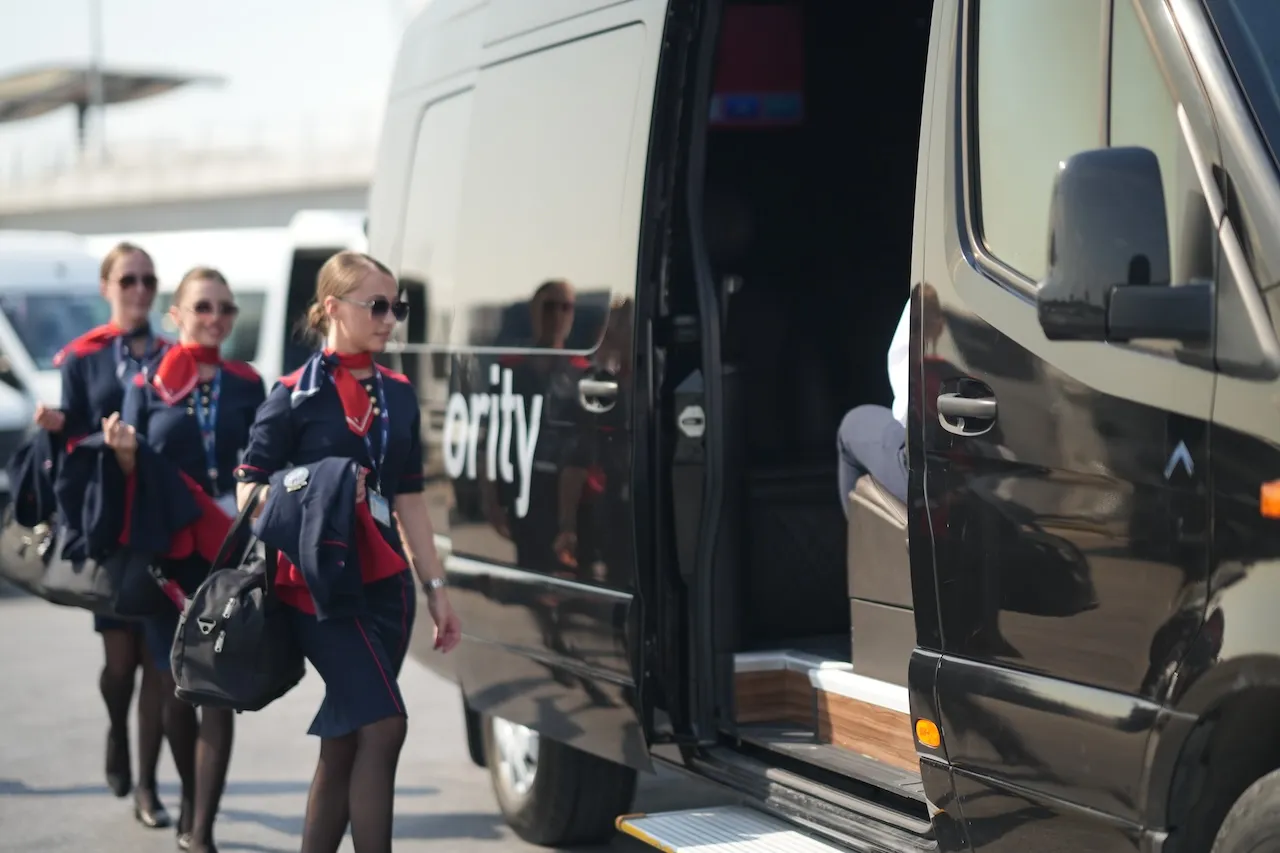
- The T-Minus 20 Protocol — Arrival at the pickup point at the exact scheduled time is considered late. Our drivers are in position at the designated FBO or terminal exit at least 20 minutes before the crew clears customs or exits the gate.
- Emergency Backup Redundancy — For every high-priority crew rotation, a secondary vehicle and driver are placed on shadow standby within a 5-mile radius. Mechanical failure or traffic incidents are resolved often without the crew realizing there was a potential issue.
| Metric | Industry Standard | BYZAS Standard |
|---|---|---|
| Buffer Time | 5 Minutes | 20 Minutes |
| Flight Tracking | Phone App | Live ADS-B & GPS |
| Backup Vehicle | On-call | Pre-positioned Standby |
| Dispatch Hours | 9 to 5 | 24/7/365 |
How Does BYZAS Maintain 24/7 Multilingual Dispatch for International Crews?
International airlines operate in a global language environment — a crew arriving from Paris, Dubai, or Tokyo should not face language barriers when locating ground transport.
Our multilingual dispatch operations bridge three critical communication gaps:
- Airline OCC (Operations Control Center) — We receive direct schedule updates, tail number changes, and passenger manifests in real-time
- Flight Crew — Crew members communicate with our dispatch via WhatsApp, Telegram, or dedicated hotline upon landing
- Chauffeur — Drivers receive real-time instructions in their native language, eliminating ambiguity in pickup locations or routing For delegation logistics, see our Istanbul airport crew transfers.
Our team is proficient in English, Turkish, Arabic, and French — ensuring technical precision and cultural nuance during IRROPS (Irregular Operations), where rapid-fire schedule changes demand error-free multilingual communication.
What Does Layover Management Look Like in Istanbul?
The Boeing 777 pilot arriving from New York and the cabin crew starting a 48-hour Istanbul layover have one primary requirement: rest.
Layover logistics in Istanbul requires managing the complex ‘Hotel-Airport-City’ triangle — with major hotel districts in Maslak, Levent, Taksim, and along the Bosphorus, all reachable from IST in 35-70 minutes depending on traffic.
EASA and FAA rest requirements are regulatory mandates, not optional. A 30-minute traffic delay can theoretically ground a crew the following day if their legal rest clock has not been satisfied. Our routing specialists use historical traffic data and AI-driven prediction models to select the most efficient corridors — incorporating the Northern Marmara Highway and the Eurasia Tunnel — to maximize crew rest time.
For off-duty leisure, our B2B contract “Crew Shuttle Packs” allow staff to book reliable, tracked transport for shopping or dining within airline safety parameters.
What Safety Standards Protect Airline Crew During Ground Transit?
Flight crews are an airline’s most valuable and difficult-to-replace asset — their safety on the ground is as critical as their safety in the air. Our executive protection services extend to aviation crew logistics with specialized protocols.
Chauffeur vetting requirements at BYZAS:
- Enhanced background checks including criminal record verification
- Minimum 5 years professional chauffeur experience
- Aviation Protocol training: understanding crew fatigue levels and the need for quiet, distraction-free cabin environments
Vehicle specifications for crew transport — view our Mercedes fleet:
- Luggage Capacity: Custom shelving for upright heavy crew bag storage
- Connectivity: High-speed 5G Wi-Fi and power outlets at every seat for pre-flight briefing
- Hygiene: HVAC systems with HEPA filters and daily deep-cleaning protocols
- Telemetry: GPS tracking for speed, location, and driving behavior with dispatch alerts for parameter breaches
What B2B Contract Terms Does BYZAS Offer Airlines?
Acquiring a crew transportation contract requires a partner that thinks like an airline — not just a car service with luxury vehicles.
BYZAS B2B framework includes:
- Service Level Agreements (SLAs) — Fixed punctuality KPIs with penalty clauses aligned to your flight delay costs
- Consolidated Billing — Monthly itemized invoicing by flight number, tail number, or cost center
- Dedicated Account Management — Single point of contact understanding your airline’s specific culture and SOPs
- Scalability — From 1 GAT transfer to 50+ daily rotations at IST, our 200+ vehicle fleet handles demand without subcontracting
Our airside and FBO clearance at both IST and SAW allows us to meet crews at the jet bridge or private terminal, eliminating public terminal exposure for VIP crew members.
Why Is Istanbul a Critical Aviation Crew Logistics Hub in 2026?
Istanbul’s strategic position at the intersection of Europe, Asia, and the Middle East makes it one of the world’s most critical aviation crossroads. Istanbul Airport (IST) has grown to become one of the top 5 busiest airports globally by passenger volume, handling over 70 million passengers annually. This scale means thousands of crew rotations every day — placing enormous pressure on ground logistics reliability. See also: crew hotel-to-venue coordination.
The cost of crew delays cascades through an airline’s entire network. When a crew is delayed departing IST due to ground transport failure, the downstream impacts include: missed connection windows for passengers, crew duty time limits approaching, slot violations at destination airports, and cascading delays across the airline’s entire schedule for that day. For a widebody aircraft operating a transatlantic route, a 2-hour delay can cost $50,000+ in fuel, passenger compensation, and operational rebooking costs.
Turkey’s aviation growth trajectory (40%+ since 2023) means this pressure is increasing. The airlines that succeed in managing crew logistics at IST are those that treat ground transport as a core operational function — not a procurement line item.
How Does BYZAS Handle Crew Transport During IRROPS Events?
IRROPS (Irregular Operations) — flight cancellations, diversions, and massive schedule disruptions — are when a crew transport partner proves their value. During peak season disruptions, IST can see 200+ flight cancellations in a single day, all requiring rapid rebooking of crew logistics.
BYZAS IRROPS response capability:
- Real-time fleet reallocation — our 200+ vehicle fleet can absorb sudden demand surges without subcontracting or delays
- Alternate airport coverage — standby capacity at Çorlu (TEQ), Anadolu Airport, and Sabiha Gökçen (SAW) for diversions
- Direct airline OCC integration — we receive schedule changes directly from operations control, often before crew members are aware
- Crew welfare priority — during extended IRROPS events, we provide crew rest room coordination, meal arrangements, and priority transport sequencing
The IRROPS test separates professional crew transport from standard car services. A provider that handles normal rotations well but fails during disruptions is not a reliable aviation logistics partner.
What Should Airline Logistics Managers Check Before Signing a Transport Contract?
When evaluating a ground transport partner in Istanbul, ensure they meet all criteria:
- Direct airside/FBO clearance at IST and SAW
- 24/7/365 dispatch with multilingual coordinators (English + minimum 2 others)
- Formal Zero-Delay Policy with pre-positioned backup vehicles
- Sufficient luggage capacity for full crew complement rotations
- EASA/FAA rest period compliance in routing decisions
- Live flight tracking (ADS-B integration preferred over app-based ETA)
- Monthly KPI reporting with punctuality metrics
Written by the BYZAS Team. BYZAS is a luxury chauffeur service with over 50 years of operational experience in Turkey, specialising in production logistics, executive transport, and high-security ground operations. Last updated: April 2026.
External Resources:
- EASA - Flight Time Limitations and Rest Periods
- FAA - Flight Crew Member Duty and Rest Requirements
- ICAO - Crew Safety and Ground Operations Standards
- IATA - Ground Handling Operations Guidelines
- Turkish DGCA - Civil Aviation Authority